Find Trade Colleges
Photographic Process Workers and Processing Machine Operators: Career Profile
Perform work involved in developing and processing photographic images from film or digital media. May perform precision tasks such as editing photographic negatives and prints.
The Daily Work of Photographic Process Workers and Processing Machine Operators Take On?
Typical responsibilities of photographic process workers and processing machine operators include:
- Select digital images for printing, specify number of images to be printed, and direct to printer, using computer software.
- Create prints according to customer specifications and laboratory protocols.
- Produce color or black-and-white photographs, negatives, or slides, applying standard photographic reproduction techniques and procedures.
- Set or adjust machine controls, according to specifications, type of operation, or material requirements.
- Review computer-processed digital images for quality.
- Operate scanners or related computer equipment to digitize negatives, photographic prints, or other images.
- Fill tanks of processing machines with solutions such as developer, dyes, stop-baths, fixers, bleaches, or washes.
- Measure and mix chemicals to prepare solutions for processing, according to formulas.
What Photographic Process Workers and Processing Machine Operators Need to Know
Top photographic process workers and processing machine operators rely on a mix of skills and domain knowledge.
Most Important Skills
The competencies that matter most in this role, rated on an importance scale of 0 to 5:
Top Knowledge Areas
Other Photographic Process Workers and Processing Machine Operators Job Titles
People in this occupation may also be known by titles such as:
- Air Brush Artist
- Airbrush Artist
- Art Tracer
- Automatic Developer
- Automatic Mounter
- Automatic Print Developer
- Black and White Printer Operator
- Color Laboratory Technician
Job Outlook
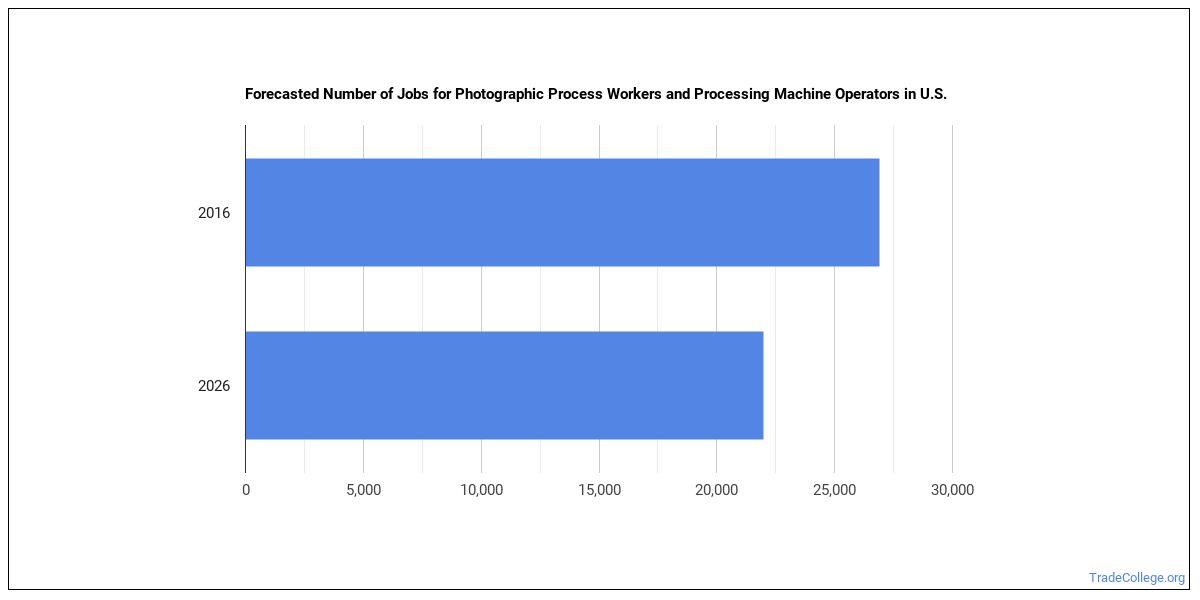
The U.S. employs around 852,250 photographic process workers and processing machine operators working in the United States today. Employment is projected to grow by +2.2% over the projection horizon.
How Much Do Photographic Process Workers and Processing Machine Operators Make?
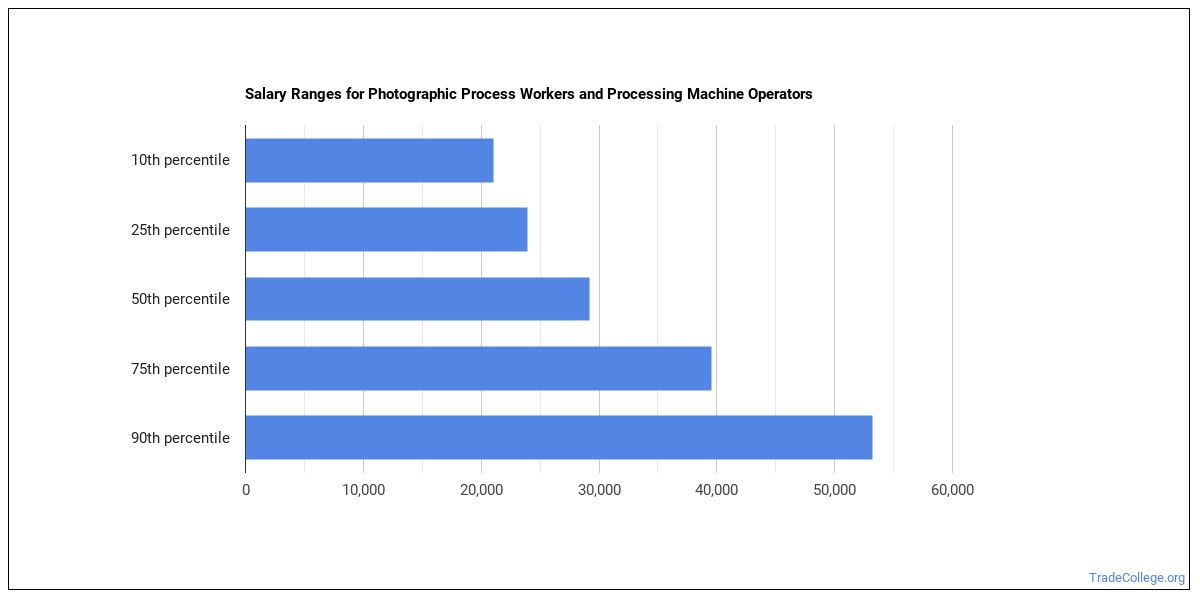
| Statistic | Value |
|---|---|
| Annual median | $45,651 |
| Hourly median | $21.95 |
| 10th percentile | $31,211 |
| 25th percentile | $38,431 |
| 75th percentile | $52,871 |
| 90th percentile | $60,090 |
Pay can vary substantially based on experience, location, and industry.
Pay by State
| State | Annual median salary |
|---|---|
| New York | $72,160 |
| Washington | $51,730 |
| Michigan | $51,590 |
| Maryland | $50,770 |
| Ohio | $50,120 |
| California | $45,850 |
| Wisconsin | $44,750 |
| New Jersey | $41,250 |
| Utah | $40,250 |
| Kentucky | $38,900 |
| Oregon | $38,650 |
| Texas | $37,980 |
| Missouri | $37,370 |
| Massachusetts | $37,230 |
| Virginia | $36,430 |
| Indiana | $36,290 |
| Pennsylvania | $36,130 |
| Florida | $35,960 |
| New Mexico | $35,960 |
| Arizona | $35,520 |
| North Carolina | $33,590 |
| Iowa | $32,100 |
| Tennessee | $31,370 |
| Georgia | $29,830 |
| Illinois | $29,120 |
| Kansas | $29,120 |
| Alabama | $28,910 |
| South Carolina | $28,860 |
Where Photographic Process Workers and Processing Machine Operators Earn the Most
Compensation for photographic process workers and processing machine operators differ across the country. The following regions pay the most:
| Region | Median annual wage | Share of U.S. jobs | Location quotient |
|---|---|---|---|
| Middle Atlantic | $52,205 | 19.3% | 1.22 |
| Great Lakes | $47,373 | 23.6% | 3.57 |
| Far Western US | $45,830 | 23.0% | 1.35 |
| Rocky Mountains | $40,250 | 2.4% | 1.78 |
| Southwest | $37,559 | 5.2% | 0.67 |
| Southeast | $33,786 | 23.2% | 1.51 |
| Plains States | $31,355 | 2.6% | 1.37 |
Top Metro Areas
| Metro area | State | Median annual wage | Employment |
|---|---|---|---|
| Seattle-Tacoma-Bellevue, WA | WA | $74,880 | 40 |
| New York-Newark-Jersey City, NY-NJ | NY | $69,360 | 320 |
| San Francisco-Oakland-Fremont, CA | CA | $53,290 | 120 |
| Milwaukee-Waukesha, WI | WI | $49,640 | 30 |
| San Jose-Sunnyvale-Santa Clara, CA | CA | $49,350 | 60 |
| Los Angeles-Long Beach-Anaheim, CA | CA | $48,600 | 360 |
| Sacramento-Roseville-Folsom, CA | CA | $47,760 | 40 |
| Riverside-San Bernardino-Ontario, CA | CA | $47,100 | 70 |
Industry Breakdown
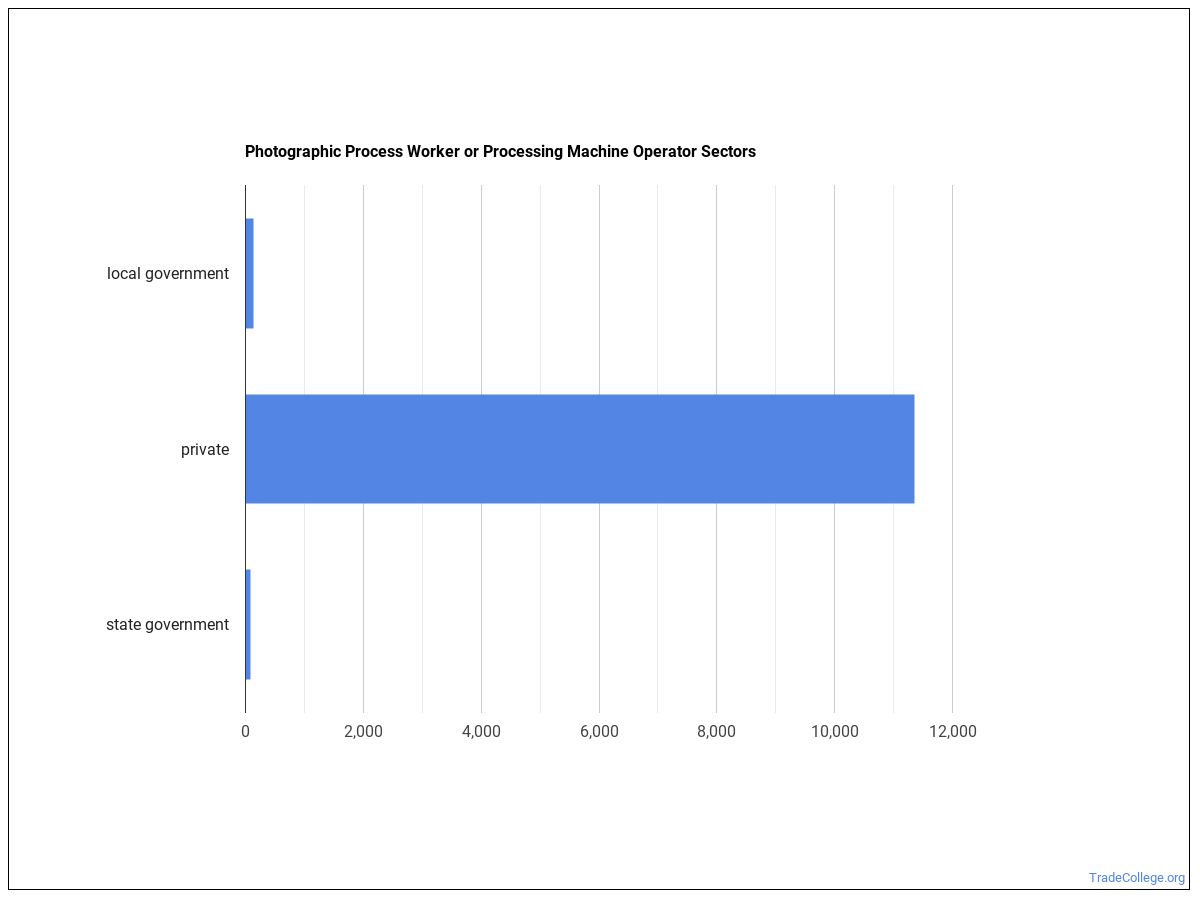
The bulk of photographic process workers and processing machine operators are concentrated in the following sectors:
| Industry | Employment | Median annual wage |
|---|---|---|
| Professional, Scientific, and Technical Services | 1,920 | $37,760 |
| Other Services (except Public Administration) | 1,030 | $36,130 |
| Information | 910 | $51,590 |
| Manufacturing | 490 | $41,460 |
| Administrative and Support and Waste Management and Remediation Services | 340 | $34,370 |
| Retail Trade | 310 | $37,230 |
| Management of Companies and Enterprises | 140 | $76,590 |
| Educational Services | 110 | $48,600 |
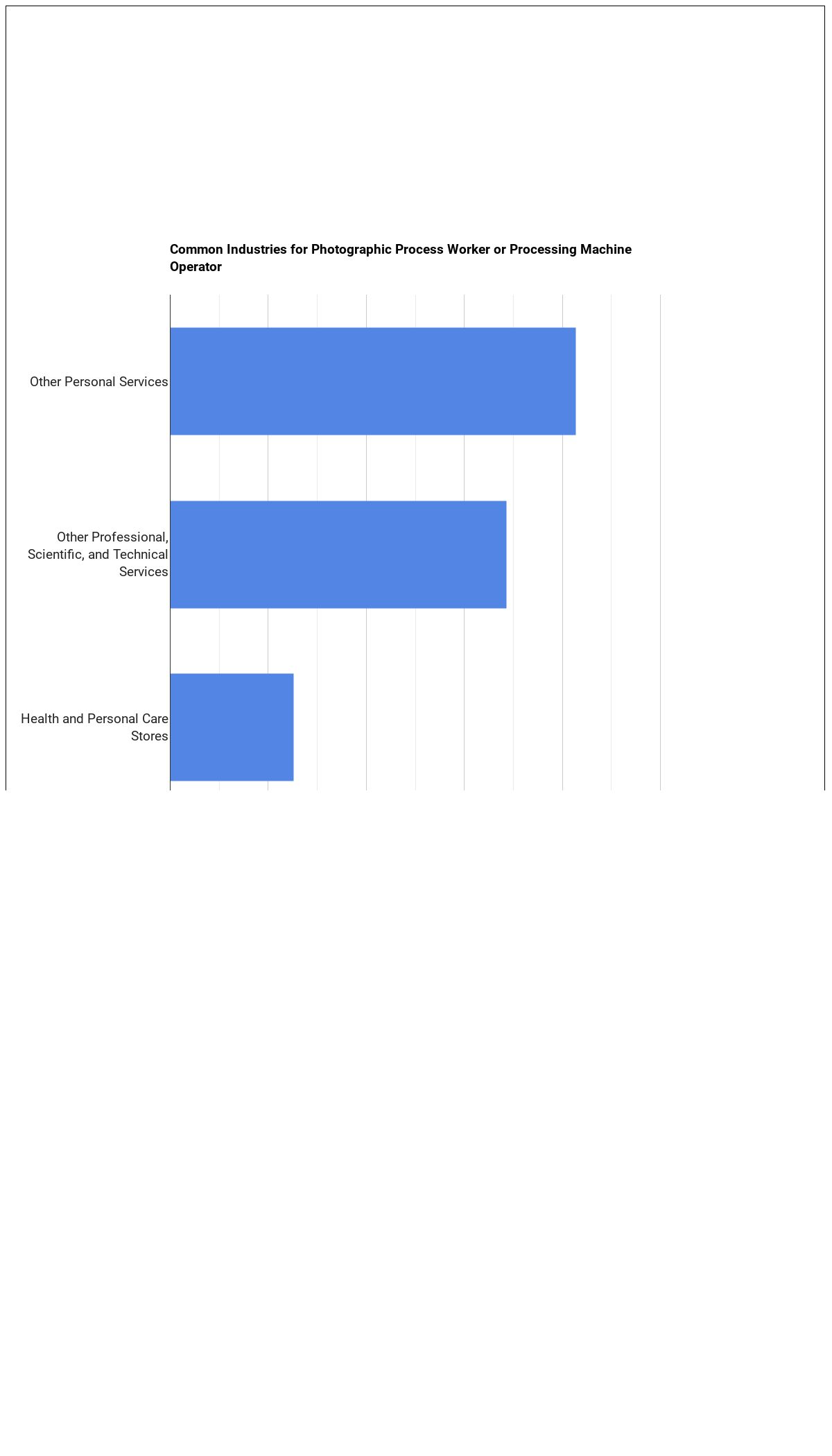
Photographic Process Workers and Processing Machine Operators work in the following industries:
Tech Stack
- Graphics or photo imaging software: Adobe Creative Cloud software (hot technology)
- Graphics or photo imaging software: Adobe Illustrator (hot technology)
- Desktop publishing software: Adobe InDesign (hot technology)
- Graphics or photo imaging software: Adobe Photoshop (hot technology)
- Data base user interface and query software: Amazon Web Services AWS software (hot technology)
- Web platform development software: Cascading style sheets CSS (hot technology)
- Application server software: Docker (hot technology)
- File versioning software: Git (hot technology)
- Data base user interface and query software: Microsoft Access (hot technology)
- Spreadsheet software: Microsoft Excel (hot technology)
- Office suite software: Microsoft Office software (hot technology)
- Electronic mail software: Microsoft Outlook (hot technology)
The Day-to-Day Environment
The work environment for photographic process workers and processing machine operators tends to involve the following characteristics:
- Face-to-Face Discussions with Individuals and Within Teams
- Telephone Conversations
- Contact With Others
- Indoors, Environmentally Controlled
- Deal With External Customers or the Public in General
Getting Started in This Career
Typical photographic process workers and processing machine operators positions require a high school diploma or equivalent as the typical entry-level education. The role falls in Some Preparation Needed (Job Zone 2), reflecting the level of preparation typically expected.
Similar Occupations
Similar Occupations
- Calibration Technologists and Technicians (Supplemental)
- Photonics Technicians (Supplemental)
- Photographers (Primary-Long)
- Motion Picture Projectionists (Supplemental)
- Office Machine Operators, Except Computer (Primary-Short)
- Computer, Automated Teller, and Office Machine Repairers (Supplemental)
- Camera and Photographic Equipment Repairers (Primary-Short)
- Patternmakers, Metal and Plastic (Supplemental)
About the Data
Statistics shown above are sourced from the following authoritative sources:
- U.S. Bureau of Labor Statistics — Occupational Employment and Wage Statistics (OEWS) for employment and wage data by state and industry.
- BLS Employment Projections for total employment and growth forecasts.
- O*NET (Occupational Information Network) for skills, knowledge, tasks, work activities, work context, technology, and education-zone data.
SOC code: 51-9151.00 (Photographic Process Workers and Processing Machine Operators).

TradeCollege.org provides higher-education, college and university, degree, program, career, salary, and other helpful information to students, faculty, institutions, and other internet audiences. Presented information and data are subject to change. Inclusion on this website does not imply or represent a direct relationship with the company, school, or brand. Information, though believed correct at time of publication, may not be correct, and no warranty is provided. Contact the schools to verify any information before relying on it. Financial aid may be available for those who qualify. TradeCollege.org is a for-profit site, and the displayed options may include sponsored or recommended results, not necessarily based on your preferences.
© TradeCollege.org – All Rights Reserved.