Find Trade Colleges
What You Need to Know About Textile or Garment Presser
Textile or Garment Presser Job Description Press or shape articles by hand or machine.
Life As a Textile or Garment Presser
- Sew ends of new material to leaders or to ends of material in pressing machines, using sewing machines.
- Moisten materials to soften and smooth them.
- Insert heated metal forms into ties and touch up rough places with hand irons.
- Examine and measure finished articles to verify conformance to standards, using measuring devices such as tape measures and micrometers.
- Shrink, stretch, or block articles by hand to conform to original measurements, using forms, blocks, and steam.
- Identify and treat spots on garments.
Featured schools near , edit
Textile or Garment Presser Required Skills
When polled, Textile and Garment Pressers say the following skills are most frequently used in their jobs:
Operation and Control: Controlling operations of equipment or systems.
Critical Thinking: Using logic and reasoning to identify the strengths and weaknesses of alternative solutions, conclusions or approaches to problems.
Operation Monitoring: Watching gauges, dials, or other indicators to make sure a machine is working properly.
Time Management: Managing one’s own time and the time of others.
Types of Textile or Garment Presser
- Hand Flatwork Finisher
- Clothes Presser
- Presser
- Pressing Machine Tender
- Hand Ironer
Job Outlook for Textile and Garment Pressers
In the United States, there were 45,000 jobs for Textile or Garment Presser in 2016. There is little to no growth in job opportunities for Textile or Garment Presser. There will be an estimated 5,200 positions for Textile or Garment Presser per year.

The states with the most job growth for Textile or Garment Presser are Montana, Utah, and Nevada. Watch out if you plan on working in Wyoming, Missouri, or Kansas. These states have the worst job growth for this type of profession.
Average Textile and Garment Pressers Salary
Textile and Garment Pressers make between $18,000 and $31,100 a year.

Textile and Garment Pressers who work in Massachusetts, Alaska, or Rhode Island, make the highest salaries.
How much do Textile and Garment Pressers make in different U.S. states?
| State | Annual Mean Salary |
|---|---|
| Alabama | $20,720 |
| Alaska | $29,390 |
| Arizona | $23,540 |
| Arkansas | $22,880 |
| California | $26,530 |
| Colorado | $24,800 |
| Connecticut | $27,210 |
| District of Columbia | $26,450 |
| Florida | $22,660 |
| Georgia | $20,040 |
| Hawaii | $24,940 |
| Idaho | $23,130 |
| Illinois | $22,530 |
| Indiana | $24,600 |
| Iowa | $23,910 |
| Kansas | $23,670 |
| Kentucky | $24,090 |
| Louisiana | $24,230 |
| Maine | $25,720 |
| Maryland | $26,910 |
| Massachusetts | $33,630 |
| Michigan | $22,990 |
| Minnesota | $28,190 |
| Mississippi | $21,660 |
| Missouri | $22,780 |
| Montana | $25,340 |
| Nebraska | $24,330 |
| Nevada | $23,270 |
| New Hampshire | $24,790 |
| New Jersey | $24,770 |
| New Mexico | $22,110 |
| New York | $27,660 |
| North Carolina | $21,810 |
| Ohio | $23,890 |
| Oklahoma | $19,590 |
| Oregon | $26,020 |
| Pennsylvania | $23,060 |
| Rhode Island | $29,200 |
| South Carolina | $22,300 |
| Tennessee | $26,330 |
| Texas | $21,270 |
| Utah | $23,600 |
| Virginia | $21,560 |
| Washington | $30,330 |
| West Virginia | $25,620 |
| Wisconsin | $25,250 |
| Wyoming | $20,700 |
What Tools do Textile and Garment Pressers Use?
Below is a list of the types of tools and technologies that Textile and Garment Pressers may use on a daily basis:
- Microsoft Excel
- Microsoft Word
- Email software
How to Become a Textile or Garment Presser
Are there Textile and Garment Pressers education requirements?
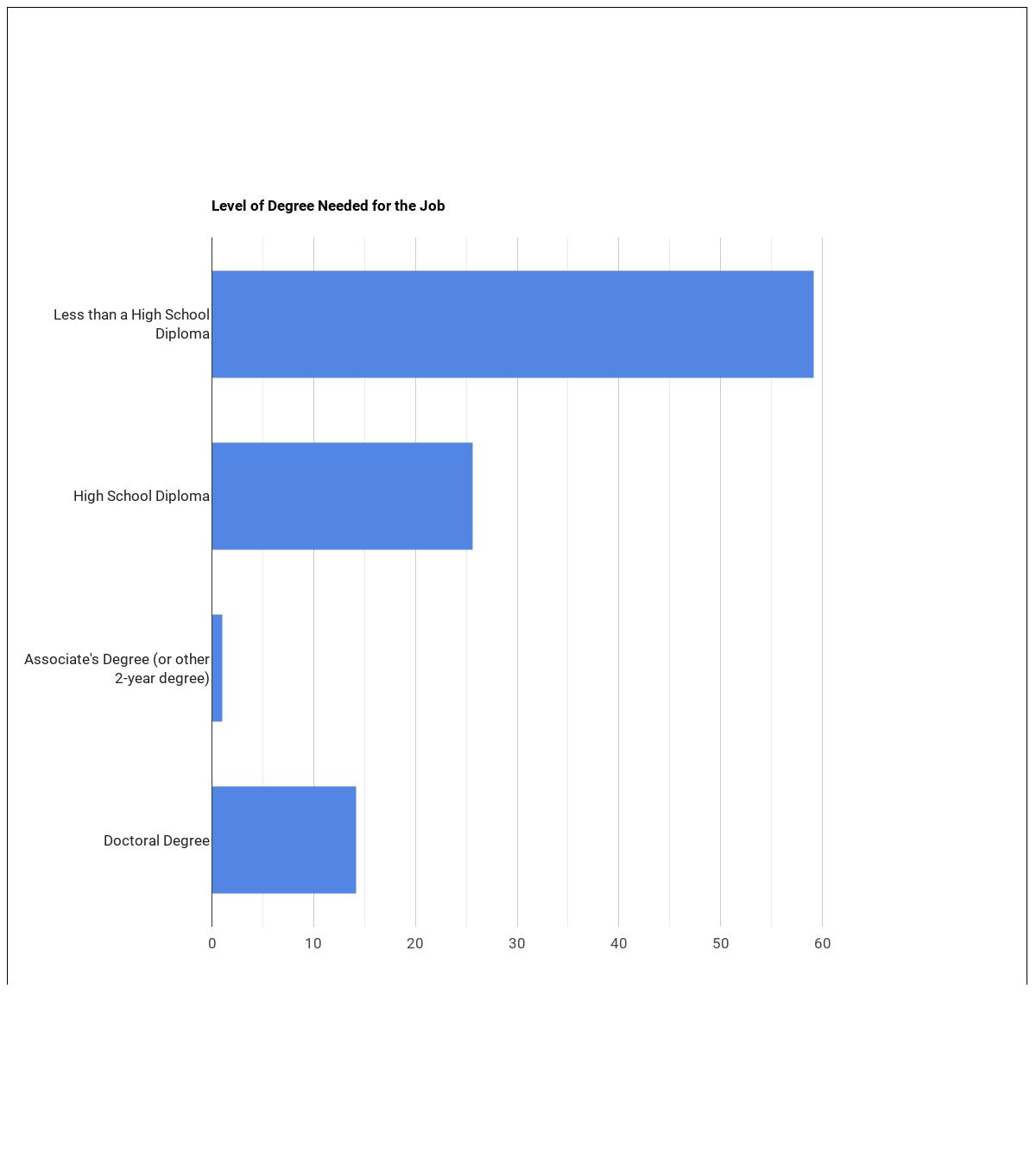
What work experience do I need to become a Textile or Garment Presser?

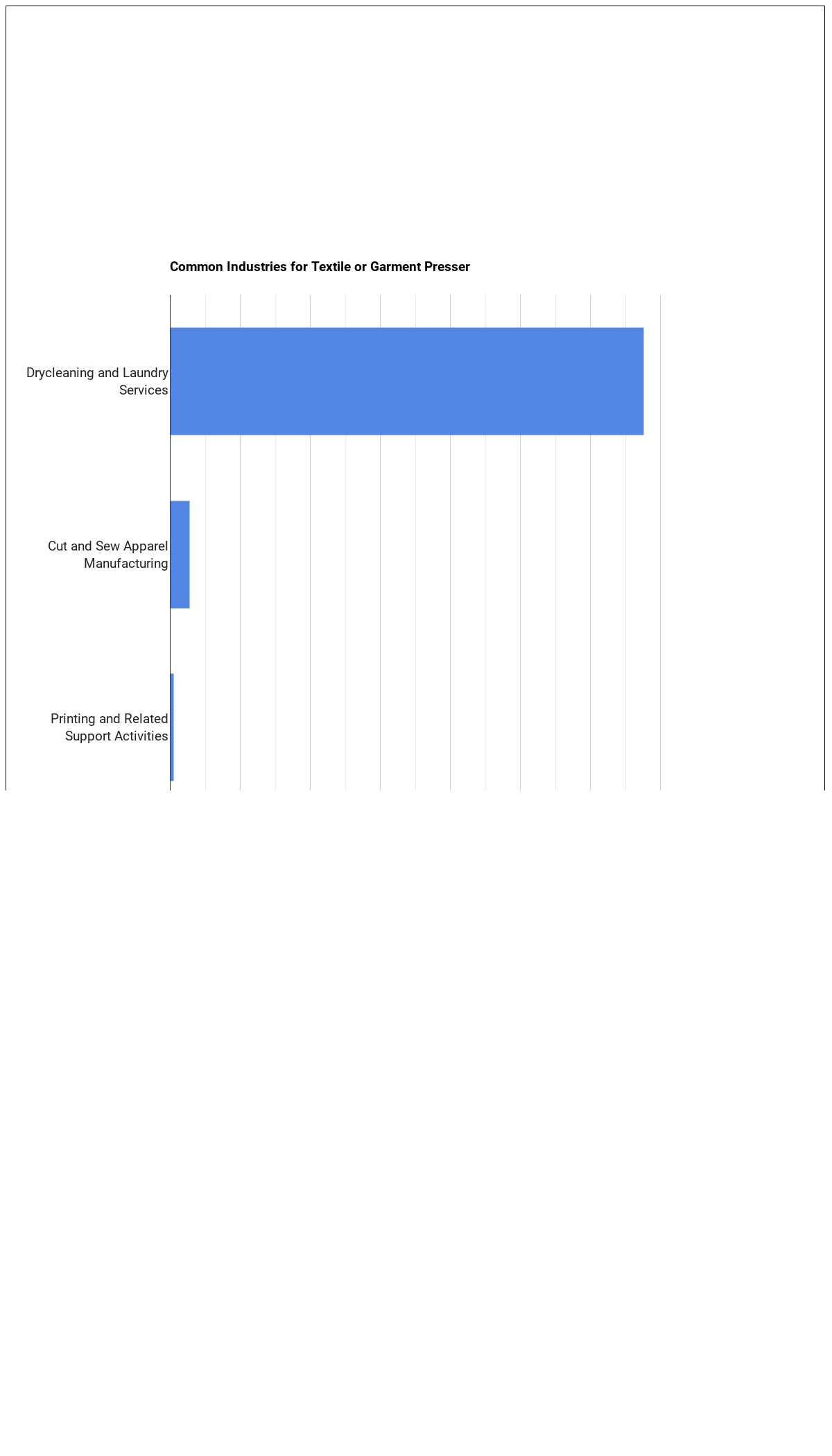
Where Textile and Garment Pressers Are Employed
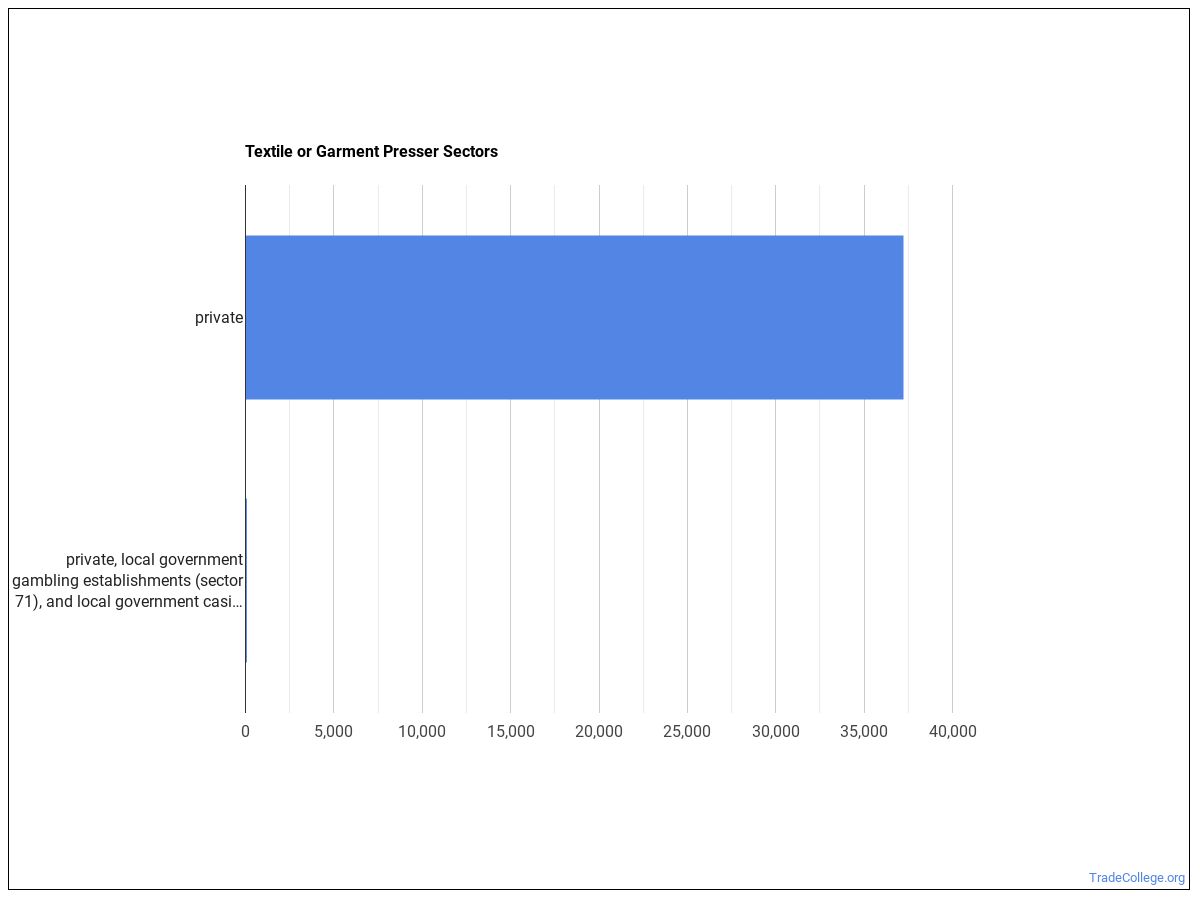
The table below shows the approximate number of Textile and Garment Pressers employed by various industries.
Related Careers
Are you already one of the many Textile or Garment Presser in the United States? If you’re thinking about changing careers, these fields are worth exploring:
- Graders and Sorters, Agricultural Products
- Maids and Housekeeping Cleaners
- Slaughterers and Meat Packers
References:
More about our data sources and methodologies.

TradeCollege.org provides higher-education, college and university, degree, program, career, salary, and other helpful information to students, faculty, institutions, and other internet audiences. Presented information and data are subject to change. Inclusion on this website does not imply or represent a direct relationship with the company, school, or brand. Information, though believed correct at time of publication, may not be correct, and no warranty is provided. Contact the schools to verify any information before relying on it. Financial aid may be available for those who qualify. TradeCollege.org is a for-profit site, and the displayed options may include sponsored or recommended results, not necessarily based on your preferences.
© TradeCollege.org – All Rights Reserved.