Find Trade Colleges
Veterinary Technologists and Technicians: Career Overview
Perform medical tests in a laboratory environment for use in the treatment and diagnosis of diseases in animals. Prepare vaccines and serums for prevention of diseases. Prepare tissue samples, take blood samples, and execute laboratory tests, such as urinalysis and blood counts. Clean and sterilize instruments and materials and maintain equipment and machines. May assist a veterinarian during surgery.
What Do Veterinary Technologists and Technicians Take On?
The core tasks performed by veterinary technologists and technicians span:
- Administer anesthesia to animals, under the direction of a veterinarian, and monitor animals' responses to anesthetics so that dosages can be adjusted.
- Care for and monitor the condition of animals recovering from surgery.
- Maintain controlled drug inventory and related log books.
- Perform laboratory tests on blood, urine, or feces, such as urinalyses or blood counts, to assist in the diagnosis and treatment of animal health problems.
- Prepare and administer medications, vaccines, serums, or treatments, as prescribed by veterinarians.
- Restrain animals during exams or procedures.
- Administer emergency first aid, such as performing emergency resuscitation or other life saving procedures.
- Clean and sterilize instruments, equipment, or materials.
What Veterinary Technologists and Technicians Need to Know
Effective veterinary technologists and technicians rely on a mix of skills and domain knowledge.
Key Skills
The competencies most important for this role, rated on an importance scale of 0 to 5:
Core Knowledge
Related Job Titles
Common job titles for this role include:
- Animal Care Technician (Animal Care Tech)
- Animal Health Technician (Animal Health Tech)
- Animal Technician (Animal Tech)
- Certified Veterinary Technician (CVT)
- Emergency Veterinary Technician (Emergency Vet Tech)
- Internal Medicine Veterinary Technician (Internal Medicine Vet Tech)
- Licensed Veterinary Technician (LVT)
- Registered Veterinary Technician (RVT)
Job Outlook
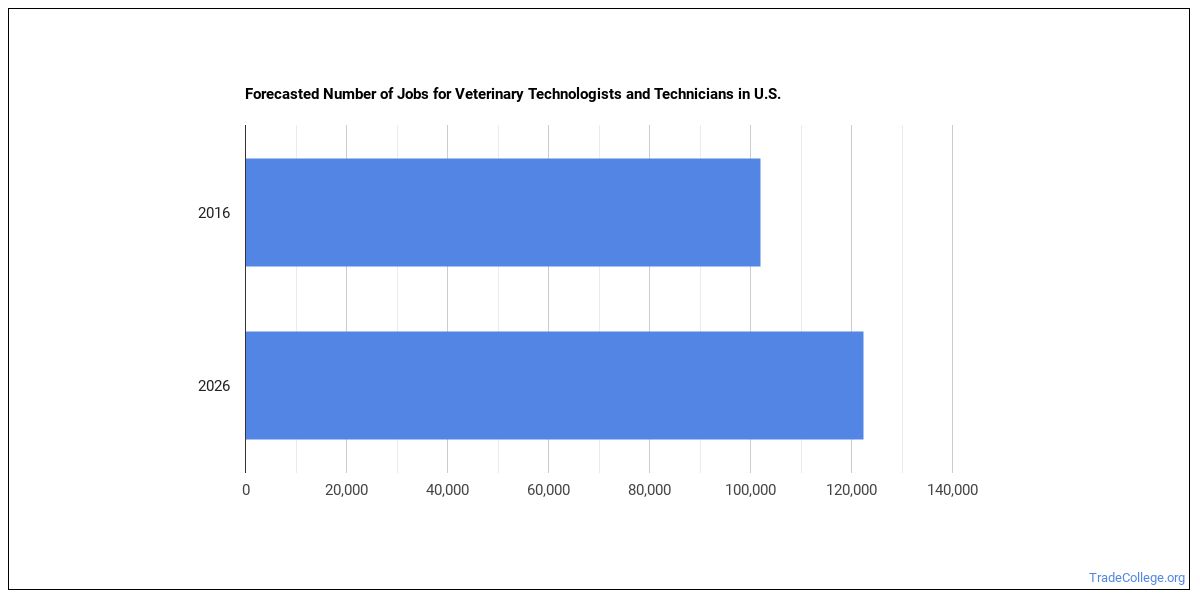
There are about 1,946,495 veterinary technologists and technicians working in the United States today. This occupation is expected to decline by -4.7% over the projection horizon.
How Much Do Veterinary Technologists and Technicians Make?
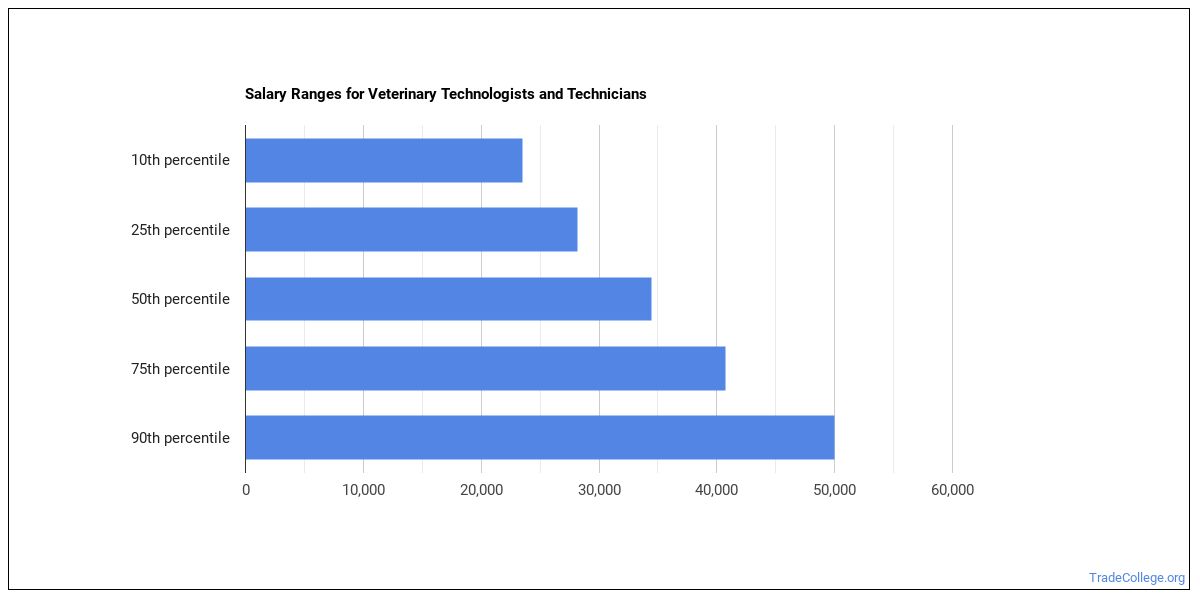
| Statistic | Value |
|---|---|
| Annual median | $47,148 |
| Hourly median | $22.67 |
| 10th percentile | $26,888 |
| 25th percentile | $37,018 |
| 75th percentile | $57,279 |
| 90th percentile | $67,409 |
Wages vary widely based on experience, location, and industry.
Veterinary Technologists and Technicians Salary by State
| State | Annual median salary |
|---|---|
| Washington | $59,080 |
| New York | $58,830 |
| District of Columbia | $55,900 |
| Virginia | $55,790 |
| California | $55,080 |
| Minnesota | $49,480 |
| Maine | $49,460 |
| Oregon | $48,950 |
| Connecticut | $48,880 |
| New Jersey | $48,630 |
| New Hampshire | $48,600 |
| Nevada | $48,590 |
| Colorado | $48,360 |
| Illinois | $47,860 |
| Hawaii | $47,670 |
| Indiana | $47,520 |
| Michigan | $47,150 |
| Massachusetts | $47,130 |
| Delaware | $47,100 |
| Vermont | $46,650 |
| Maryland | $46,620 |
| Ohio | $46,390 |
| North Carolina | $45,460 |
| Wisconsin | $45,340 |
| South Dakota | $45,220 |
| Arizona | $45,110 |
| Rhode Island | $42,230 |
| Pennsylvania | $41,910 |
| Iowa | $41,780 |
| North Dakota | $40,900 |
| Florida | $40,380 |
| Montana | $39,690 |
| Utah | $39,400 |
| Nebraska | $39,180 |
| Kansas | $39,070 |
| Missouri | $39,010 |
| Georgia | $38,810 |
| New Mexico | $37,980 |
| South Carolina | $37,960 |
| Oklahoma | $37,920 |
| Wyoming | $37,580 |
| Texas | $37,250 |
| Kentucky | $37,180 |
| Tennessee | $36,940 |
| Idaho | $36,670 |
| West Virginia | $36,350 |
| Mississippi | $36,090 |
| Arkansas | $34,880 |
| Alabama | $30,480 |
| Louisiana | $29,920 |
| Puerto Rico | $23,530 |
Where Veterinary Technologists and Technicians Earn the Most
Compensation for veterinary technologists and technicians shift depending on where you work. Top regions by median wage:
| Region | Median annual wage | Share of U.S. jobs | Location quotient |
|---|---|---|---|
| Far Western US | $54,522 | 12.5% | 0.76 |
| Middle Atlantic | $49,204 | 14.2% | 1.00 |
| New England | $47,551 | 6.4% | 1.35 |
| Great Lakes | $46,897 | 13.4% | 0.95 |
| Plains States | $44,309 | 7.3% | 1.23 |
| Rocky Mountains | $44,151 | 5.4% | 1.40 |
| Southeast | $40,051 | 24.1% | 1.02 |
| Southwest | $38,555 | 16.3% | 1.31 |
Top Metro Areas
| Metro area | State | Median annual wage | Employment |
|---|---|---|---|
| San Francisco-Oakland-Fremont, CA | CA | $66,300 | 1,220 |
| Mount Vernon-Anacortes, WA | WA | $64,750 | 60 |
| Corvallis, OR | OR | $63,970 | 100 |
| Seattle-Tacoma-Bellevue, WA | WA | $60,430 | 1,190 |
| San Jose-Sunnyvale-Santa Clara, CA | CA | $60,180 | 450 |
| Bellingham, WA | WA | $59,240 | 80 |
| Kingston, NY | NY | $58,660 | 60 |
| Yakima, WA | WA | $58,230 | 110 |
Which Industries Hire Veterinary Technologists and Technicians
Most veterinary technologists and technicians are found across these industries:
| Industry | Employment | Median annual wage |
|---|---|---|
| Professional, Scientific, and Technical Services | 120,950 | $45,780 |
| Educational Services | 4,050 | $51,250 |
| Other Services (except Public Administration) | 3,610 | $41,730 |
| Arts, Entertainment, and Recreation | 270 | $55,030 |
| Health Care and Social Assistance | 260 | $47,780 |
| Agriculture, Forestry, Fishing and Hunting | 220 | $45,880 |
| Retail Trade | 190 | $54,080 |
| Manufacturing | 180 | $74,810 |
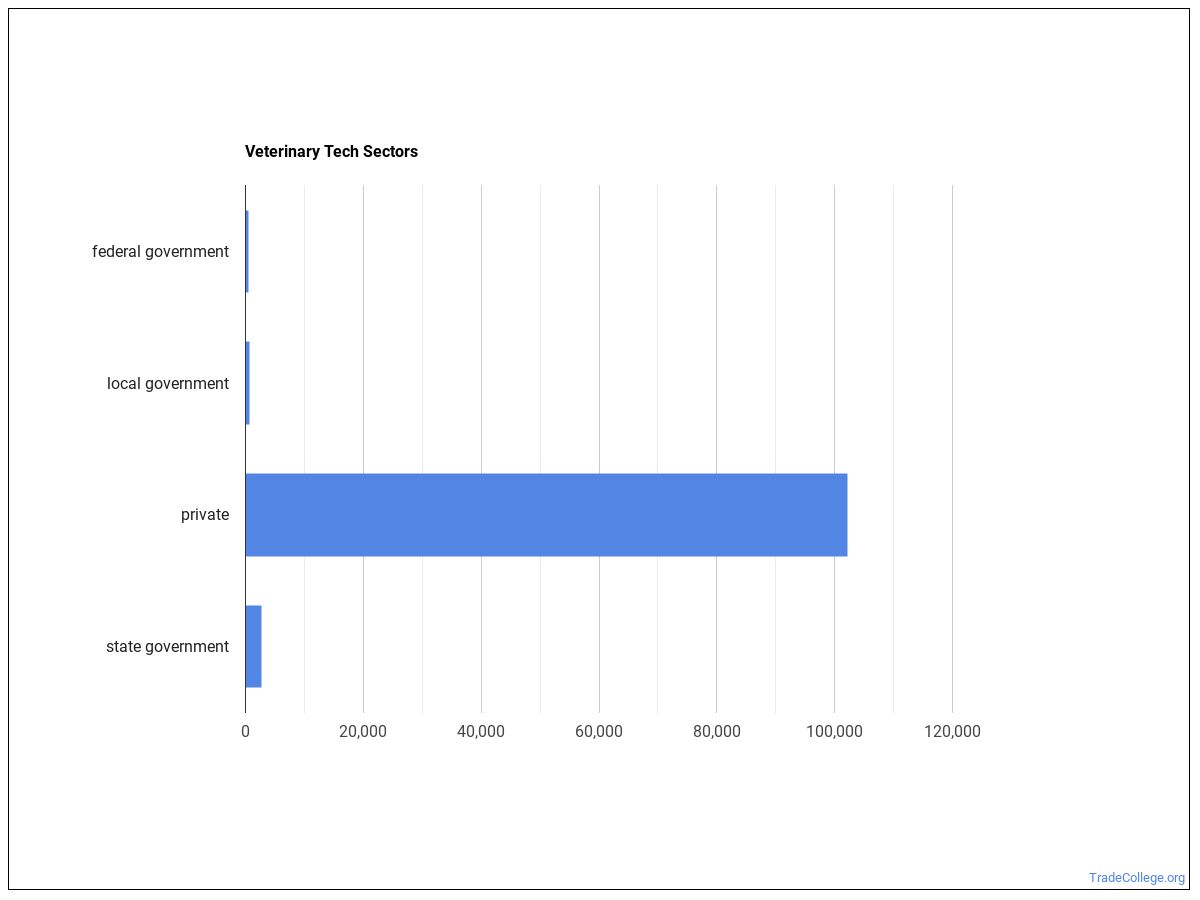
Veterinary Technologists and Technicians work in the following industries:

Tech Stack
- Data base user interface and query software: Microsoft Access (hot technology)
- Spreadsheet software: Microsoft Excel (hot technology)
- Office suite software: Microsoft Office software (hot technology)
- Electronic mail software: Microsoft Outlook (hot technology)
- Presentation software: Microsoft PowerPoint (hot technology)
- Word processing software: Microsoft Word (hot technology)
The Day-to-Day Environment
The work environment for veterinary technologists and technicians tends to involve the following characteristics:
- Contact With Others
- Work With or Contribute to a Work Group or Team
- Physical Proximity
- Indoors, Environmentally Controlled
- Importance of Being Exact or Accurate
How to Become Veterinary Technologists and Technicians
Most veterinary technologists and technicians positions require a high school diploma or equivalent as the typical entry-level education. This occupation sits in Medium Preparation Needed (Job Zone 3), reflecting the level of preparation typically expected.
Similar Occupations
Similar Occupations
- Physician Assistants (Supplemental)
- Anesthesiologist Assistants (Supplemental)
- Veterinarians (Supplemental)
- Nurse Anesthetists (Supplemental)
- Anesthesiologists (Supplemental)
- Emergency Medicine Physicians (Supplemental)
- Urologists (Supplemental)
- Pediatric Surgeons (Supplemental)
Sources
Statistics shown above are sourced from the following authoritative sources:
- U.S. Bureau of Labor Statistics — Occupational Employment and Wage Statistics (OEWS) for employment and wage data by state and industry.
- BLS Employment Projections for total employment and growth forecasts.
- O*NET (Occupational Information Network) for skills, knowledge, tasks, work activities, work context, technology, and education-zone data.
SOC code: 29-2056.00 (Veterinary Technologists and Technicians).

TradeCollege.org provides higher-education, college and university, degree, program, career, salary, and other helpful information to students, faculty, institutions, and other internet audiences. Presented information and data are subject to change. Inclusion on this website does not imply or represent a direct relationship with the company, school, or brand. Information, though believed correct at time of publication, may not be correct, and no warranty is provided. Contact the schools to verify any information before relying on it. Financial aid may be available for those who qualify. TradeCollege.org is a for-profit site, and the displayed options may include sponsored or recommended results, not necessarily based on your preferences.
© TradeCollege.org – All Rights Reserved.