Find Trade Colleges
Textile Cutting Machine Setters, Operators, and Tenders: Career Overview
Set up, operate, or tend machines that cut textiles.
What Do Textile Cutting Machine Setters, Operators, and Tenders Take On?
The core tasks performed by textile cutting machine setters, operators, and tenders cover:
- Inspect products to ensure that the quality standards and specifications are met.
- Place patterns on top of layers of fabric and cut fabric following patterns, using electric or manual knives, cutters, or computer numerically controlled cutting devices.
- Start machines, monitor operations, and make adjustments as needed.
- Adjust machine controls, such as heating mechanisms, tensions, or speeds, to produce specified products.
- Record information about work completed and machine settings.
- Notify supervisors of mechanical malfunctions.
- Inspect machinery to determine whether repairs are needed.
- Confer with coworkers to obtain information about orders, processes, or problems.
Key Skills and Knowledge
Effective textile cutting machine setters, operators, and tenders draw on a mix of skills and domain knowledge.
Most Important Skills
The competencies most important for this role, rated on an importance scale of 0 to 5:
Top Knowledge Areas
Types of Textile Cutting Machine Setters, Operators, and Tenders Jobs
Common job titles for this role include:
- Automated Cutting Machine Operator
- Automatic Die Cutting Machine Operator
- Automatic Folding Machine Operator
- Automatic Label Cutting Machine Operator
- Band Cutter
- Barrel Drum Cutter
- Bedspread Cutter
- Bias Cutting Machine Operator
Job Outlook
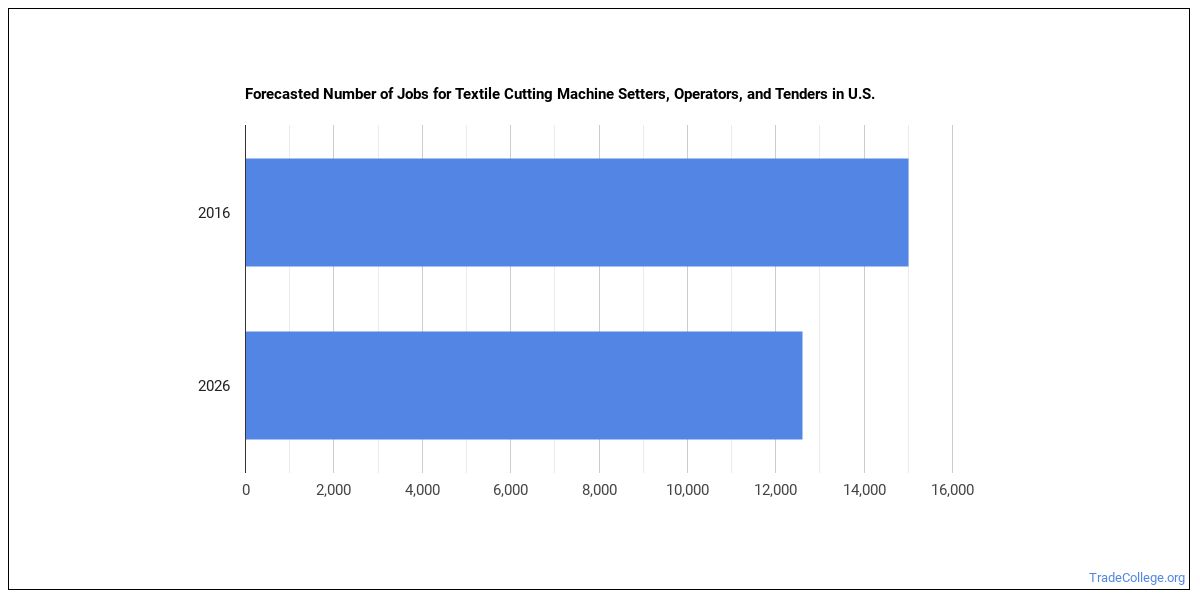
The U.S. employs around 651,718 textile cutting machine setters, operators, and tenders working in the United States today. Demand is forecast to grow by +14.9% over the projection horizon.
Textile Cutting Machine Setters, Operators, and Tenders Pay
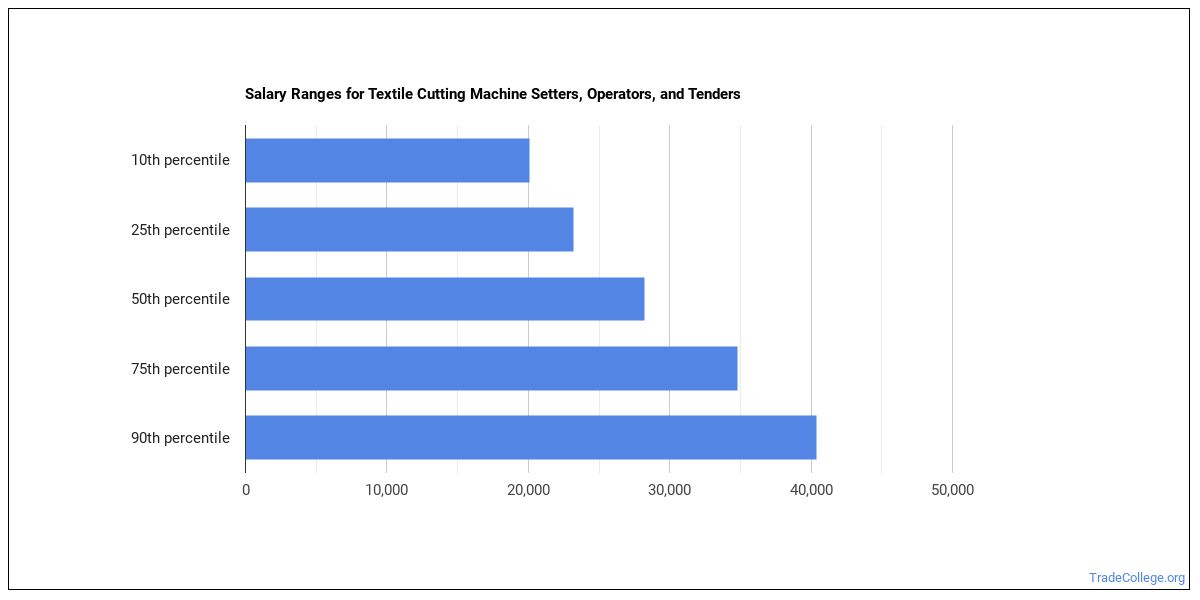
| Statistic | Value |
|---|---|
| Annual median | $53,948 |
| Hourly median | $25.94 |
| 10th percentile | $32,650 |
| 25th percentile | $43,299 |
| 75th percentile | $64,598 |
| 90th percentile | $75,247 |
Compensation varies based on experience, location, and industry.
How Much Do Textile Cutting Machine Setters, Operators, and Tenders Make in Different U.S. States?
| State | Annual median salary |
|---|---|
| New York | $45,960 |
| Connecticut | $42,590 |
| Minnesota | $41,600 |
| Georgia | $40,830 |
| South Carolina | $40,560 |
| New Hampshire | $40,350 |
| Washington | $40,120 |
| New Jersey | $39,240 |
| North Carolina | $38,850 |
| Oregon | $38,830 |
| Ohio | $38,540 |
| Tennessee | $38,500 |
| California | $38,280 |
| Mississippi | $38,160 |
| Illinois | $37,850 |
| Arizona | $37,660 |
| Wisconsin | $37,500 |
| Indiana | $37,480 |
| Pennsylvania | $36,890 |
| Virginia | $36,520 |
| Florida | $36,350 |
| Michigan | $36,080 |
| Maine | $35,140 |
| Maryland | $33,950 |
| Massachusetts | $33,570 |
| Nevada | $33,280 |
| Arkansas | $32,240 |
| Iowa | $31,900 |
| Alabama | $31,810 |
| Kansas | $31,570 |
| Oklahoma | $29,510 |
| Texas | $28,300 |
| Missouri | $28,120 |
| Kentucky | $26,300 |
| Puerto Rico | $21,840 |
Top-Paying U.S. Regions
Pay for textile cutting machine setters, operators, and tenders shift depending on where you work. These regions lead on median pay:
| Region | Median annual wage | Share of U.S. jobs | Location quotient |
|---|---|---|---|
| Middle Atlantic | $40,317 | 9.7% | 0.71 |
| Southeast | $38,829 | 48.6% | 3.57 |
| Far Western US | $38,566 | 13.0% | 0.85 |
| Great Lakes | $37,661 | 9.4% | 0.76 |
| New England | $36,710 | 4.1% | 1.08 |
| Plains States | $32,793 | 4.2% | 0.80 |
| Southwest | $28,929 | 9.5% | 0.85 |
| Other U.S. Territories | $21,840 | 1.5% | 2.34 |
Where the Jobs Cluster
| Metro area | State | Median annual wage | Employment |
|---|---|---|---|
| Greenville-Anderson-Greer, SC | SC | $47,880 | 200 |
| Hickory-Lenoir-Morganton, NC | NC | $47,620 | 360 |
| Grand Rapids-Wyoming-Kentwood, MI | MI | $44,990 | 30 |
| New York-Newark-Jersey City, NY-NJ | NY | $44,440 | 370 |
| Atlanta-Sandy Springs-Roswell, GA | GA | $41,460 | 580 |
| Spartanburg, SC | SC | $40,170 | 70 |
| Seattle-Tacoma-Bellevue, WA | WA | $40,040 | 90 |
| Charlotte-Concord-Gastonia, NC-SC | NC | $40,030 | 90 |
Which Industries Hire Textile Cutting Machine Setters, Operators, and Tenders
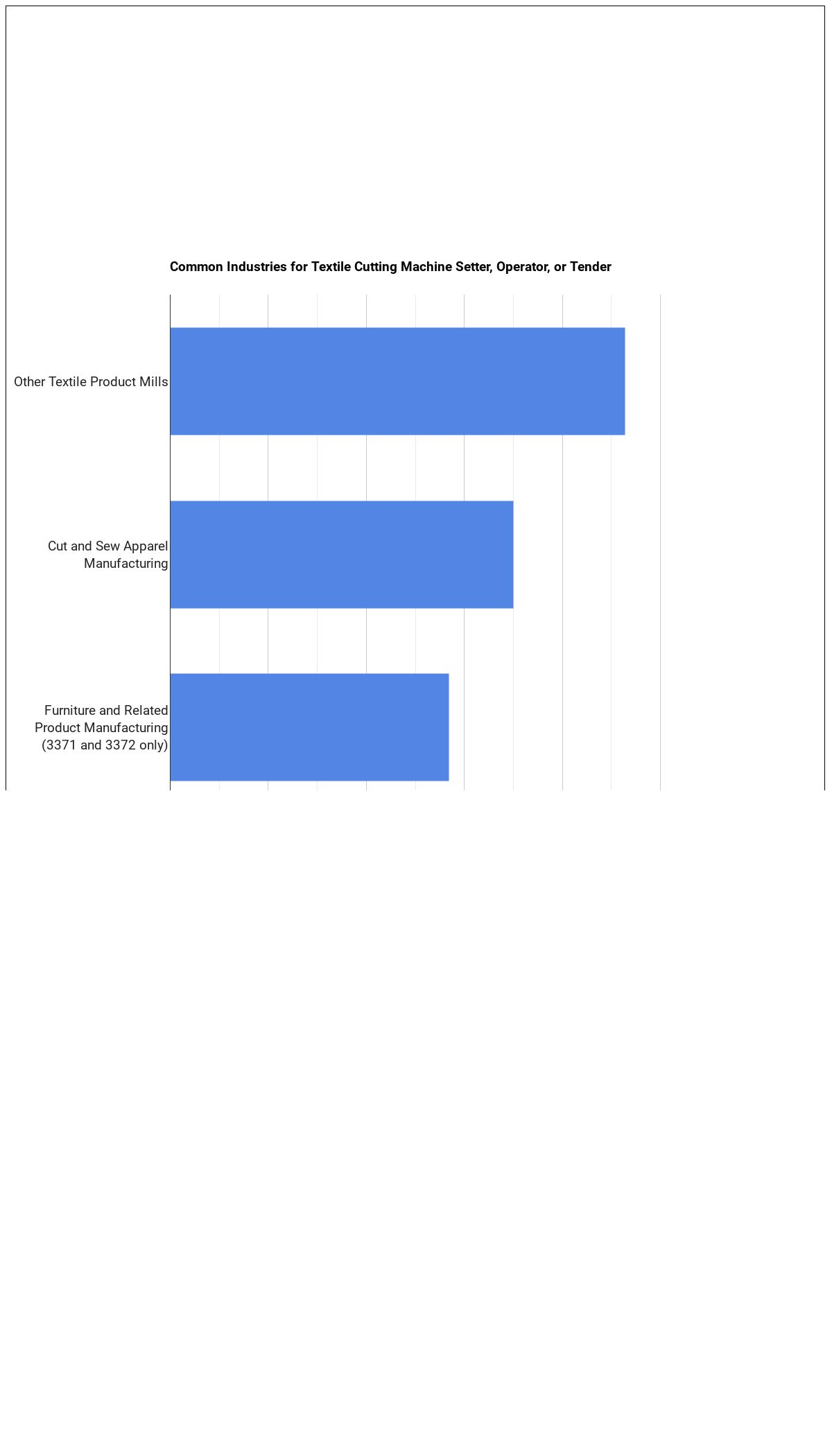
The largest employers of textile cutting machine setters, operators, and tenders are concentrated in the following sectors:
| Industry | Employment | Median annual wage |
|---|---|---|
| Manufacturing | 7,420 | $38,030 |
| Wholesale Trade | 690 | $38,910 |
| Administrative and Support and Waste Management and Remediation Services | 220 | $37,940 |
| Retail Trade | 170 | $37,290 |
| Other Services (except Public Administration) | 160 | $28,200 |
| Transportation and Warehousing | 140 | $37,500 |
| Professional, Scientific, and Technical Services | 70 | $37,500 |
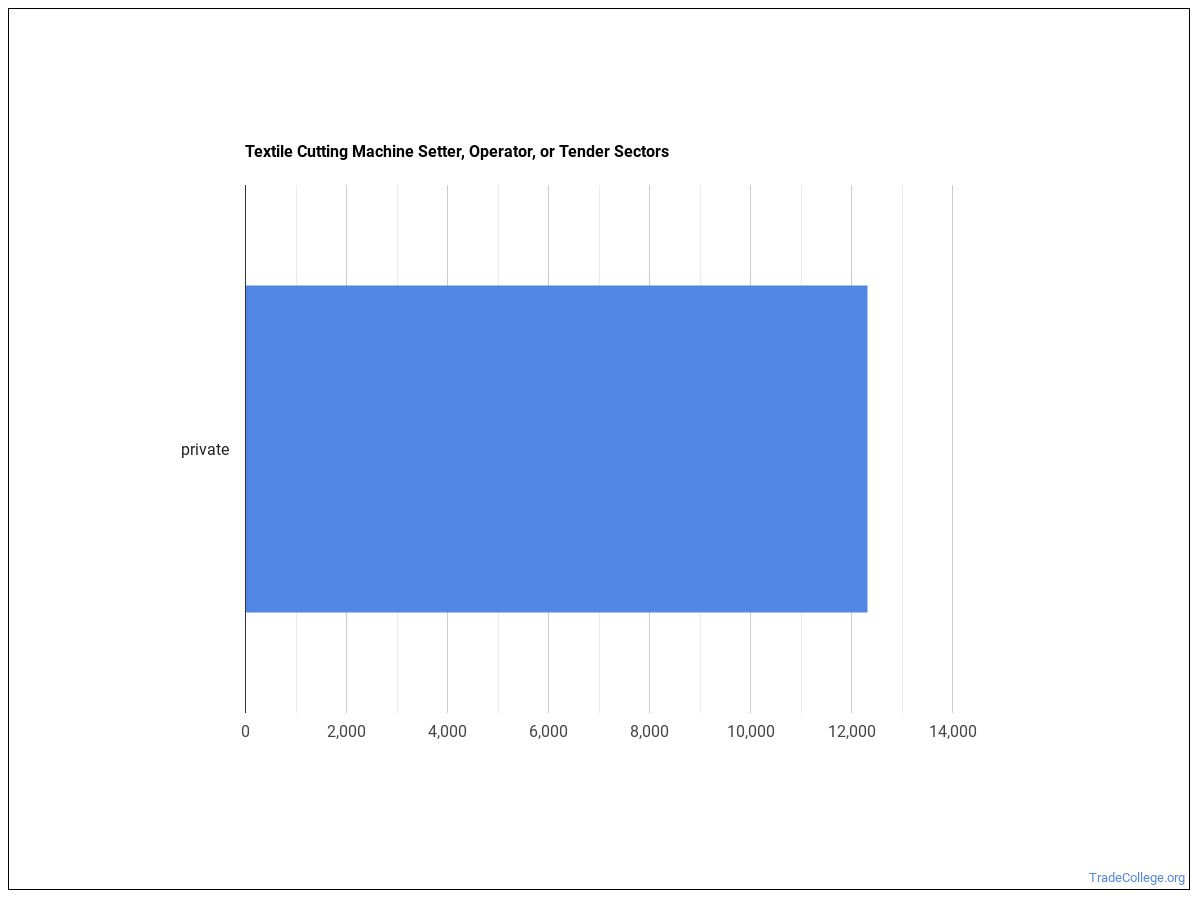
The table below shows some of the most common industries where those employed in this career field work.
Tools and Technology
- Computer aided design CAD software: Autodesk AutoCAD (hot technology)
- Spreadsheet software: Microsoft Excel (hot technology)
- Office suite software: Microsoft Office software (hot technology)
- Electronic mail software: Microsoft Outlook (hot technology)
- Operating system software: Microsoft Windows (hot technology)
- Word processing software: Microsoft Word (hot technology)
- Enterprise resource planning ERP software: SAP software (hot technology)
Work Environment
Daily working conditions for textile cutting machine setters, operators, and tenders is shaped by the following characteristics:
- Face-to-Face Discussions with Individuals and Within Teams
- Spend Time Standing
- Importance of Being Exact or Accurate
- Spend Time Using Your Hands to Handle, Control, or Feel Objects, Tools, or Controls
- Pace Determined by Speed of Equipment
Education and Training
Typical textile cutting machine setters, operators, and tenders positions require a high school diploma or equivalent as the typical entry-level education. The role falls in Some Preparation Needed (Job Zone 2), signaling the level of preparation typically expected.
Other Careers to Consider
Similar Occupations
- Industrial Machinery Mechanics (Supplemental)
- Rolling Machine Setters, Operators, and Tenders, Metal and Plastic (Supplemental)
- Cutting, Punching, and Press Machine Setters, Operators, and Tenders, Metal and Plastic (Primary-Short)
- Grinding, Lapping, Polishing, and Buffing Machine Tool Setters, Operators, and Tenders, Metal and Plastic (Primary-Short)
- Lathe and Turning Machine Tool Setters, Operators, and Tenders, Metal and Plastic (Supplemental)
- Milling and Planing Machine Setters, Operators, and Tenders, Metal and Plastic (Primary-Long)
- Multiple Machine Tool Setters, Operators, and Tenders, Metal and Plastic (Primary-Long)
- Tool Grinders, Filers, and Sharpeners (Supplemental)
References
Data on this page comes from the following authoritative sources:
- U.S. Bureau of Labor Statistics — Occupational Employment and Wage Statistics (OEWS) for employment and wage data by state and industry.
- BLS Employment Projections for total employment and growth forecasts.
- O*NET (Occupational Information Network) for skills, knowledge, tasks, work activities, work context, technology, and education-zone data.
SOC code: 51-6062.00 (Textile Cutting Machine Setters, Operators, and Tenders).

TradeCollege.org provides higher-education, college and university, degree, program, career, salary, and other helpful information to students, faculty, institutions, and other internet audiences. Presented information and data are subject to change. Inclusion on this website does not imply or represent a direct relationship with the company, school, or brand. Information, though believed correct at time of publication, may not be correct, and no warranty is provided. Contact the schools to verify any information before relying on it. Financial aid may be available for those who qualify. TradeCollege.org is a for-profit site, and the displayed options may include sponsored or recommended results, not necessarily based on your preferences.
© TradeCollege.org – All Rights Reserved.