Find Trade Colleges
Hope International University Trade Programs
Located in Fullerton, California, Hope International University is a private not-for-profit institution. Fullerton is a good match for students who enjoy the safety and convenience of the suburbs.
Featured schools near , edit
Where Is Hope International University?

Contact details for Hope are given below.
| Contact Details | |
|---|---|
| Address: | 2500 E Nutwood Ave, Fullerton, CA 92831-3199 |
| Phone: | 714-879-3901 |
| Website: | www.hiu.edu |
Can I Afford Hope?
| In State | Out of State | |
|---|---|---|
| Tuition | $35,000 | $35,000 |
| Fees | $1,250 | $1,250 |
| Books and Supplies | $938 | $938 |
| On Campus Room and Board | $13,700 | $13,700 |
| On Campus Other Expenses | $2,871 | $2,871 |
Student Loan Debt
Almost 66% of college students who graduated with the class of 2018 took out student loans, but that percentage varies from school to school. At Hope, approximately 63% of students took out student loans averaging $5,845 a year. That adds up to $23,380 over four years for those students.
Hope International University Undergraduate Student Diversity
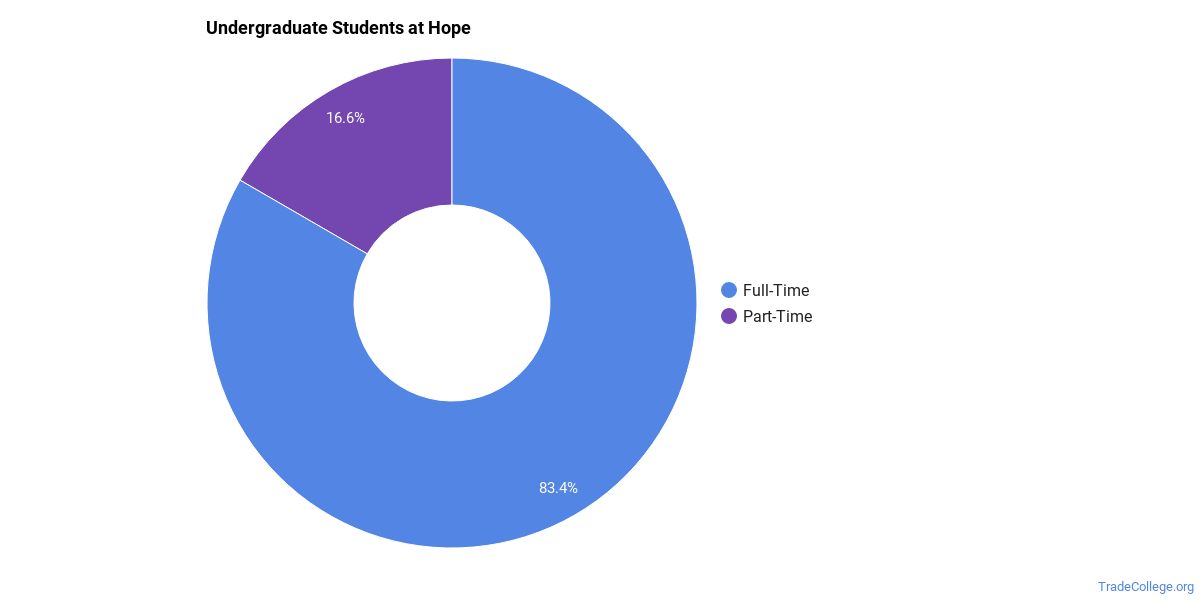
There are also 544 graduate students at the school.
Gender Diversity
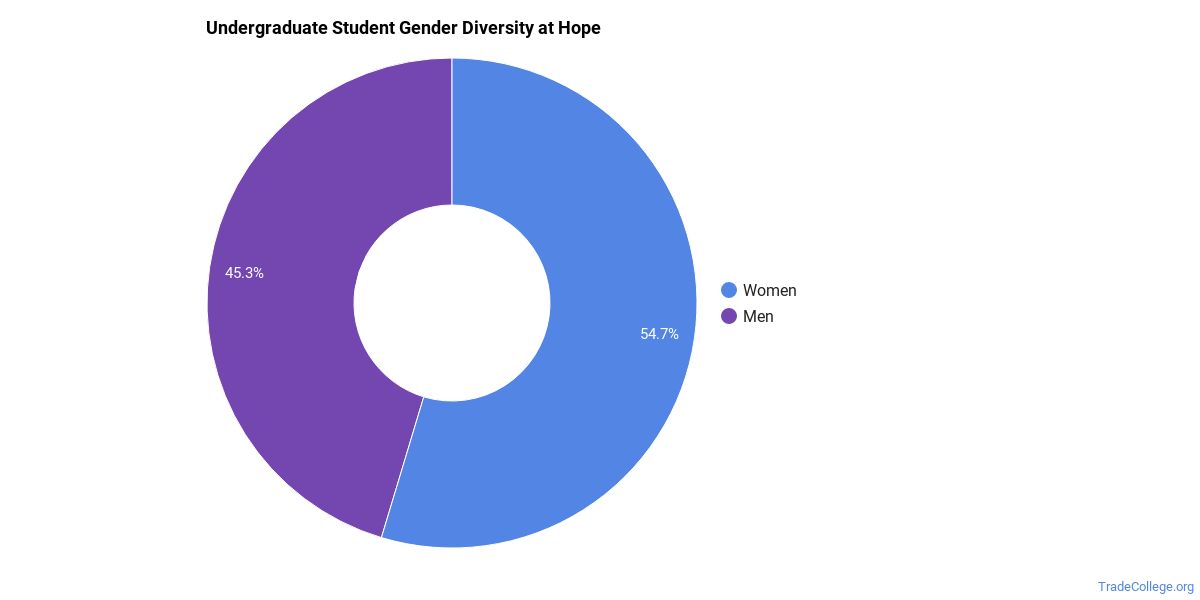
Of the 529 full-time undergraduates at Hope, 44% are male and 56% are female.
Racial-Ethnic Diversity
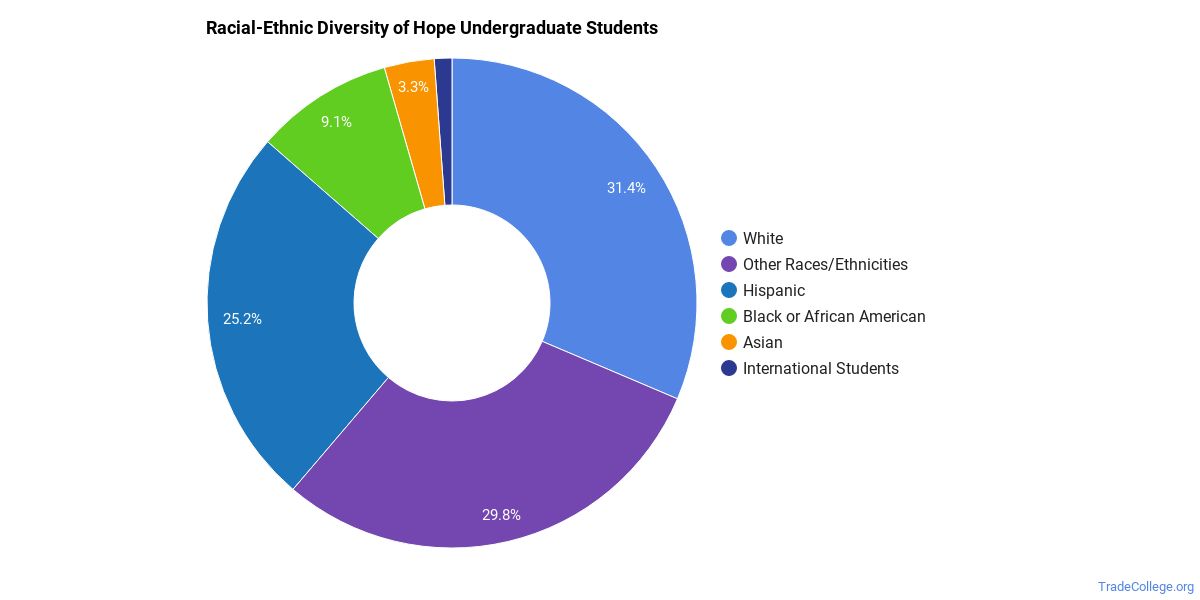
The racial-ethnic breakdown of Hope International University students is as follows.
| Race/Ethnicity | Number of Grads |
|---|---|
| Asian | 22 |
| Black or African American | 39 |
| Hispanic or Latino | 142 |
| White | 196 |
| International Students | 6 |
| Other Races/Ethnicities | 124 |
Geographic Diversity
California students aren't the only ones who study at Hope International University. At this time, 8 states are represented by the student population at the school.
Over 16 countries are represented at Hope. The most popular countries sending students to the school are South Korea, France, and Brazil.
References
*The racial-ethnic minorities count is calculated by taking the total number of students and subtracting white students, international students, and students whose race/ethnicity was unknown. This number is then divided by the total number of students at the school to obtain the racial-ethnic minorities percentage.
- College Factual
- National Center for Education Statistics
- Image Credit: By Slcoats under License
More about our data sources and methodologies.

TradeCollege.org provides higher-education, college and university, degree, program, career, salary, and other helpful information to students, faculty, institutions, and other internet audiences. Presented information and data are subject to change. Inclusion on this website does not imply or represent a direct relationship with the company, school, or brand. Information, though believed correct at time of publication, may not be correct, and no warranty is provided. Contact the schools to verify any information before relying on it. Financial aid may be available for those who qualify. TradeCollege.org is a for-profit site, and the displayed options may include sponsored or recommended results, not necessarily based on your preferences.
© TradeCollege.org – All Rights Reserved.