Find Trade Colleges
What You Need to Know About Shoe Machine Operator
Shoe Machine Operator Definition Operate or tend a variety of machines to join, decorate, reinforce, or finish shoes and shoe parts.
Life As a Shoe Machine Operator: What Do They Do?
- Switch on machines, lower pressure feet or rollers to secure parts, and start machine stitching, using hand, foot, or knee controls.
- Turn knobs to adjust stitch length and thread tension.
- Staple sides of shoes, pressing a foot treadle to position and hold each shoe under the feeder of the machine.
- Study work orders or shoe part tags to obtain information about workloads, specifications, and the types of materials to be used.
- Draw thread through machine guide slots, needles, and presser feet in preparation for stitching, or load rolls of wire through machine axles.
- Remove and examine shoes, shoe parts, and designs to verify conformance to specifications such as proper embedding of stitches in channels.
Featured schools near , edit
What Every Shoe Machine Operator Should Know
Shoe Machine Operators state the following job skills are important in their day-to-day work.
Operation Monitoring: Watching gauges, dials, or other indicators to make sure a machine is working properly.
Reading Comprehension: Understanding written sentences and paragraphs in work related documents.
Active Listening: Giving full attention to what other people are saying, taking time to understand the points being made, asking questions as appropriate, and not interrupting at inappropriate times.
Critical Thinking: Using logic and reasoning to identify the strengths and weaknesses of alternative solutions, conclusions or approaches to problems.
Operation and Control: Controlling operations of equipment or systems.
Quality Control Analysis: Conducting tests and inspections of products, services, or processes to evaluate quality or performance.
Other Shoe Machine Operator Job Titles
- Counter Stitcher
- Strap Sewer
- Ribbon Hand
- Edge Brusher
- Edge Cutter
Is There Job Demand for Shoe Machine Operators?
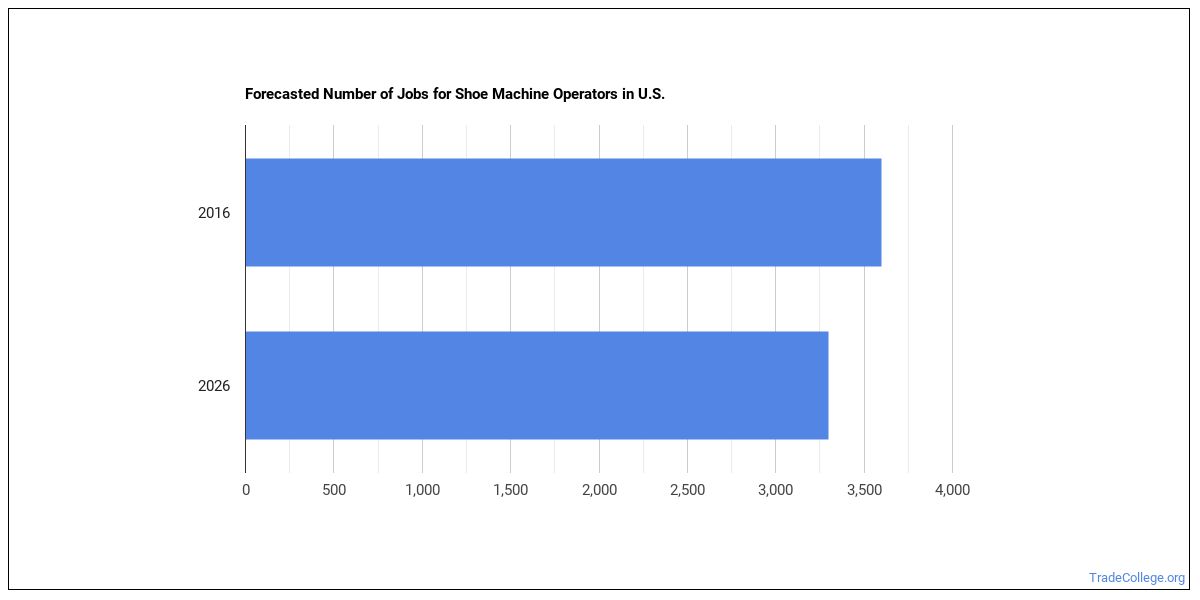
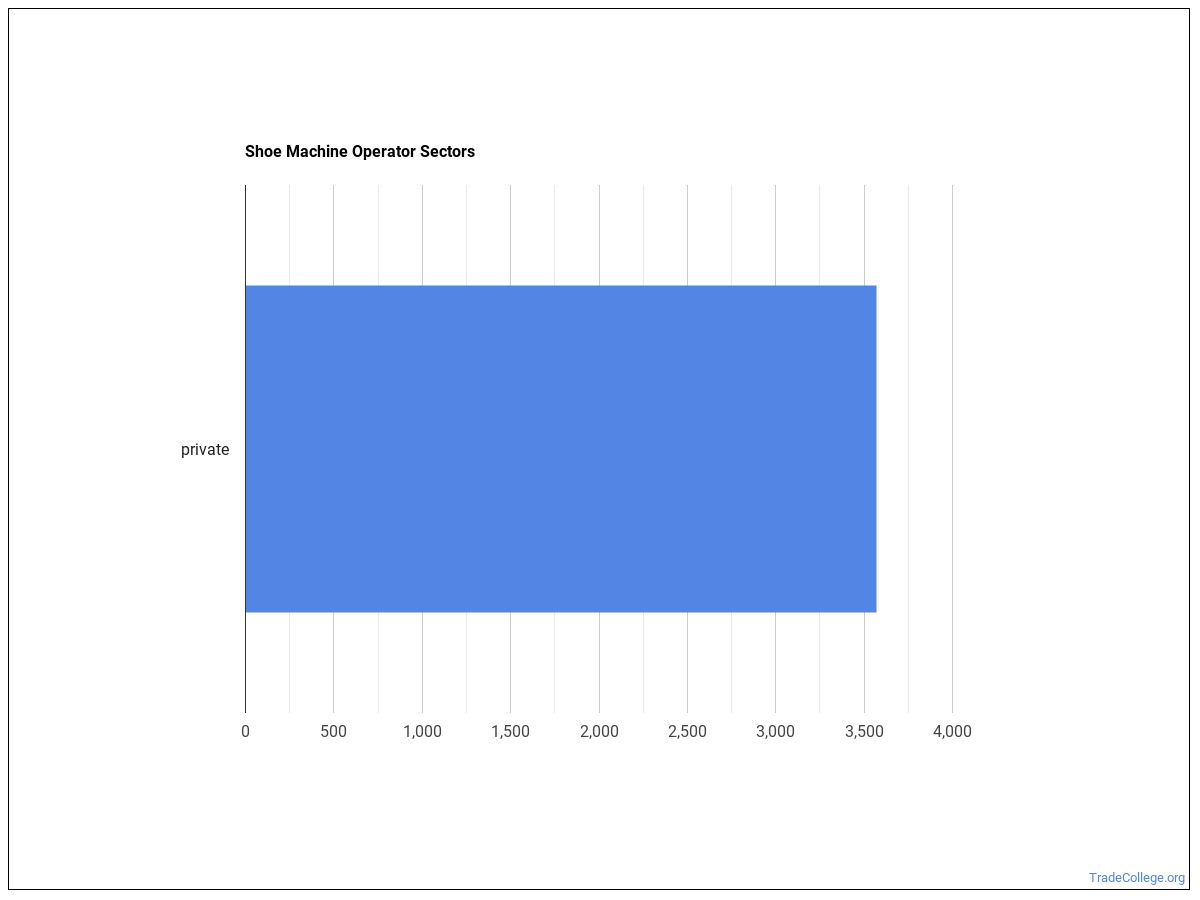
In 2016, there was an estimated number of 3,600 jobs in the United States for Shoe Machine Operator. There is little to no growth in job opportunities for Shoe Machine Operator. Due to new job openings and attrition, there will be an average of 400 job openings in this field each year.
The states with the most job growth for Shoe Machine Operator are Illinois, Oregon, and Washington. Watch out if you plan on working in Washington, Oregon, or Illinois. These states have the worst job growth for this type of profession.
Salary for a Shoe Machine Operator
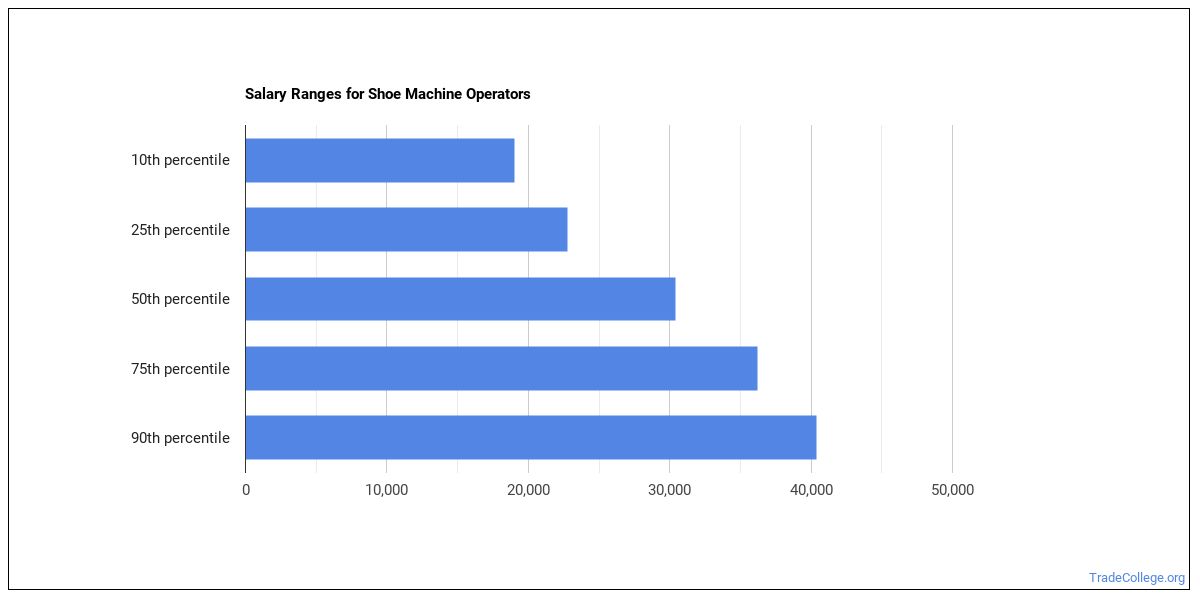
The salary for Shoe Machine Operators ranges between about $19,020 and $40,410 a year.
Shoe Machine Operators who work in Massachusetts, Wisconsin, or Maine, make the highest salaries.
Below is a list of the median annual salaries for Shoe Machine Operators in different U.S. states.
| State | Annual Mean Salary |
|---|---|
| California | $30,580 |
| Florida | $35,140 |
| Maine | $32,100 |
| Massachusetts | $43,330 |
| New York | $26,240 |
| Pennsylvania | $25,050 |
| Texas | $30,470 |
| Washington | $32,060 |
| Wisconsin | $32,300 |
What Tools do Shoe Machine Operators Use?
Although they’re not necessarily needed for all jobs, the following technologies are used by many Shoe Machine Operators:
- Microsoft Excel
- Microsoft Word
- Microsoft Office
- Microsoft PowerPoint
- Data entry software
- Adobe Systems Adobe Acrobat
- Inventory tracking software
- Microsoft operating system
- Production control software
How to Become a Shoe Machine Operator
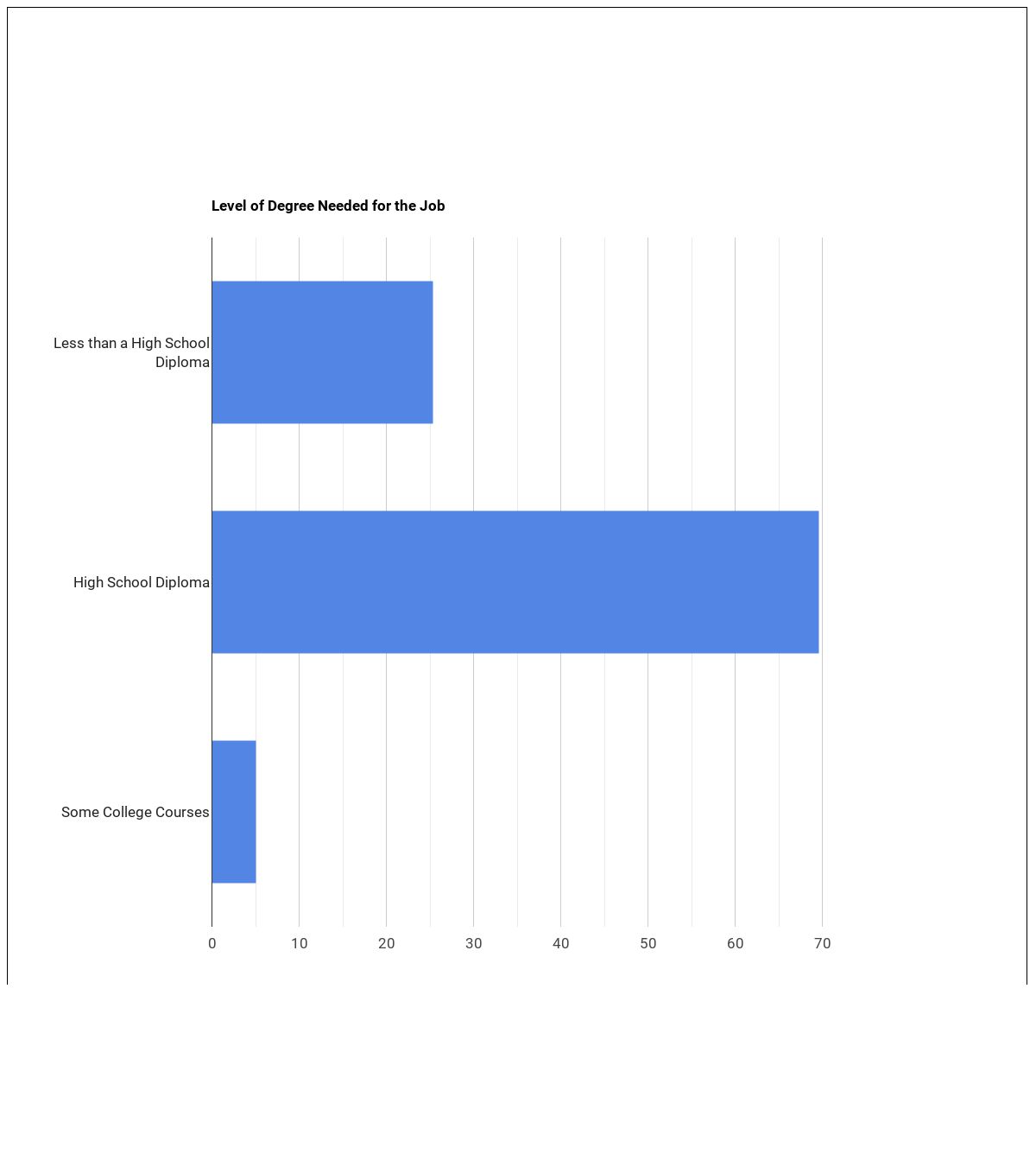
What education or degrees do I need to become a Shoe Machine Operator?
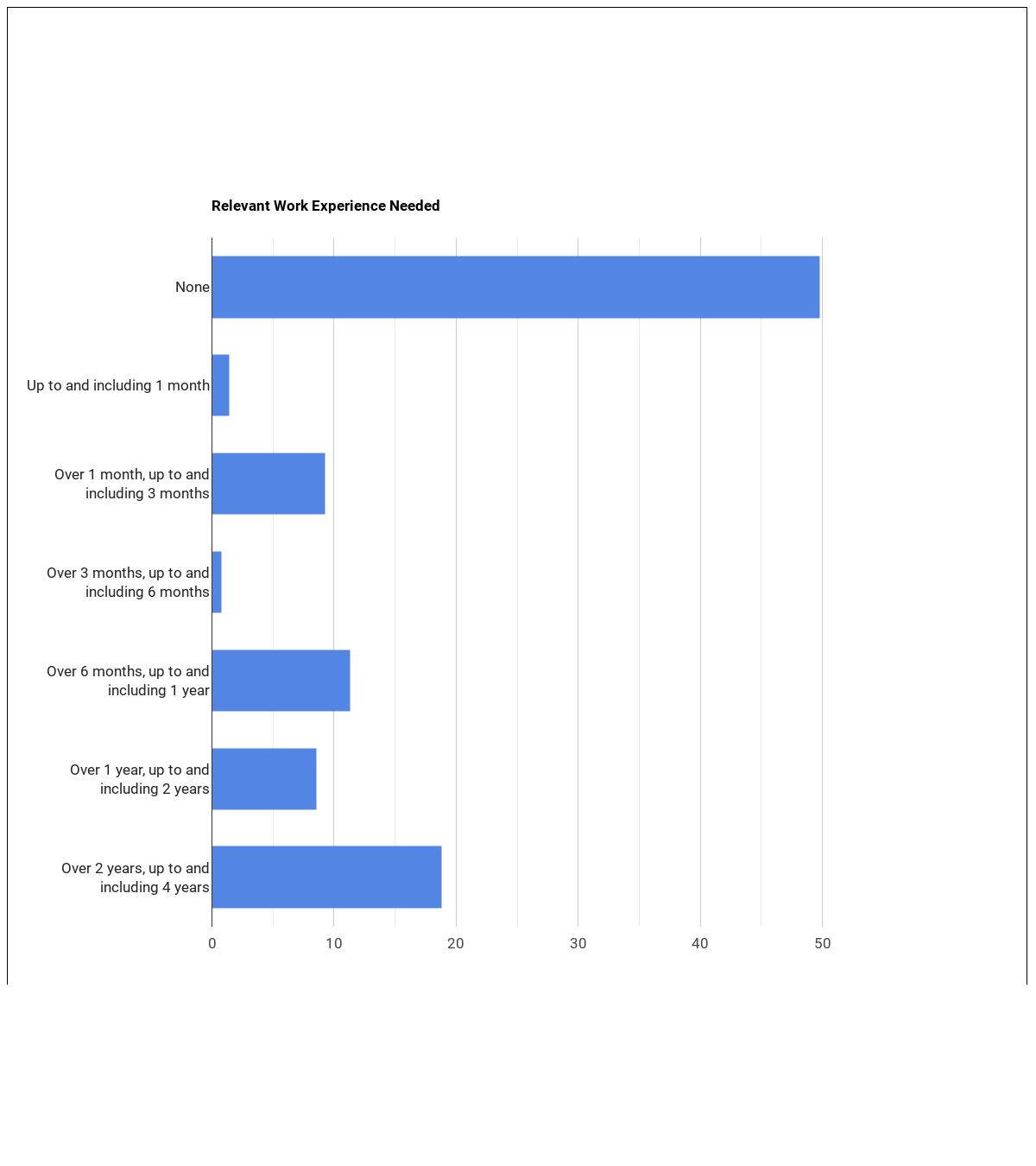
What work experience do I need to become a Shoe Machine Operator?
Where Shoe Machine Operators Work
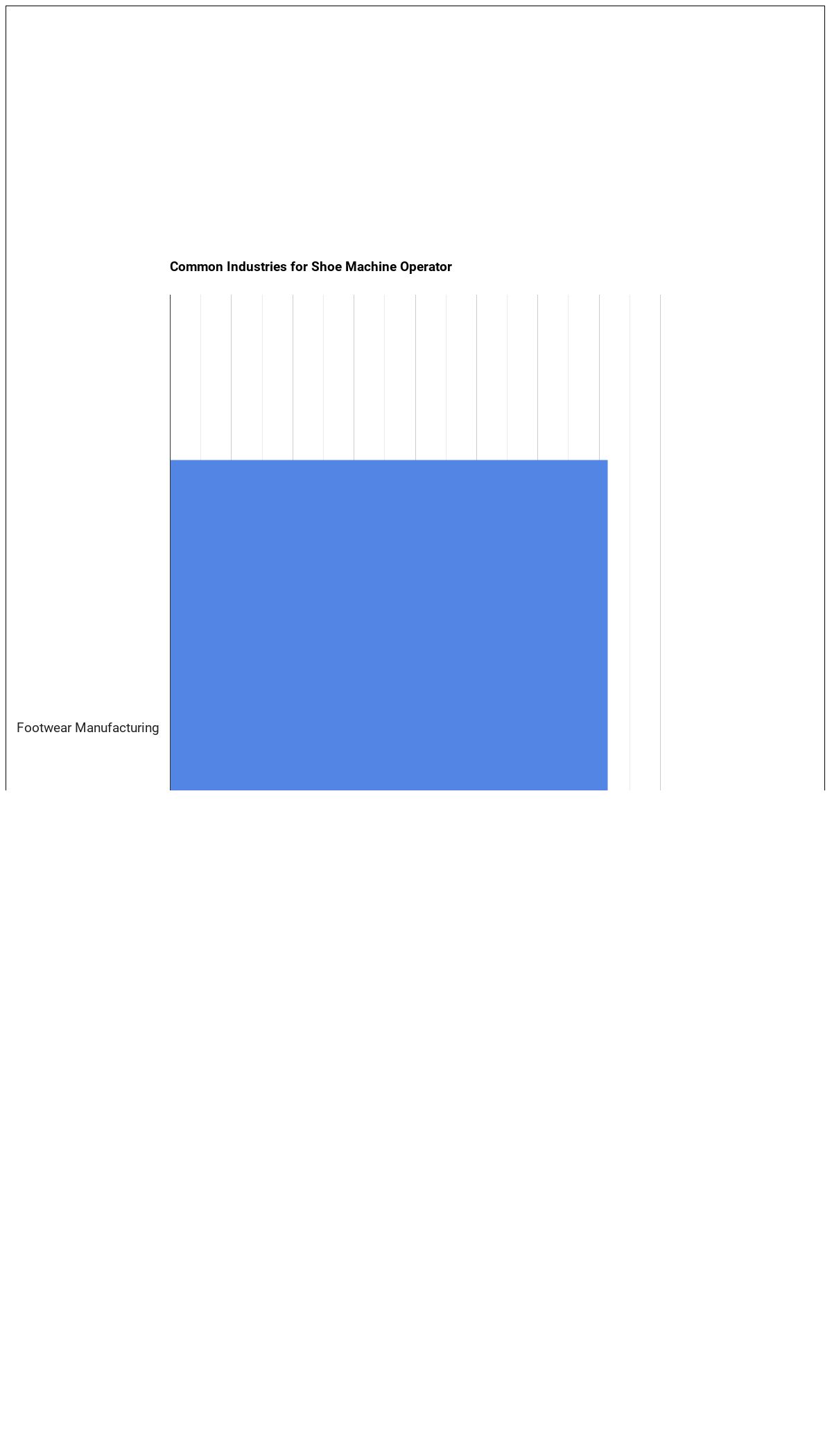
Shoe Machine Operators work in the following industries:
Related Careers
Those interested in being a Shoe Machine Operator may also be interested in:
Are you already one of the many Shoe Machine Operator in the United States? If you’re thinking about changing careers, these fields are worth exploring:
References:
Image Credit: Steven M O’Kelley via Attribution-ShareAlike 2.5
More about our data sources and methodologies.

TradeCollege.org provides higher-education, college and university, degree, program, career, salary, and other helpful information to students, faculty, institutions, and other internet audiences. Presented information and data are subject to change. Inclusion on this website does not imply or represent a direct relationship with the company, school, or brand. Information, though believed correct at time of publication, may not be correct, and no warranty is provided. Contact the schools to verify any information before relying on it. Financial aid may be available for those who qualify. TradeCollege.org is a for-profit site, and the displayed options may include sponsored or recommended results, not necessarily based on your preferences.
© TradeCollege.org – All Rights Reserved.