Find Trade Colleges
Helpers–Extraction Workers: Career Profile
Help extraction craft workers, such as earth drillers, blasters and explosives workers, derrick operators, and mining machine operators, by performing duties requiring less skill. Duties include supplying equipment or cleaning work area.
The Daily Work of Helpers–Extraction Workers Do?
The core tasks performed by helpers–extraction workers include:
- Observe and monitor equipment operation during the extraction process to detect any problems.
- Drive moving equipment to transport materials and parts to excavation sites.
- Unload materials, devices, and machine parts, using hand tools.
- Set up and adjust equipment used to excavate geological materials.
- Organize materials to prepare for use.
- Repair and maintain automotive and drilling equipment, using hand tools.
- Clean up work areas and remove debris after extraction activities are complete.
- Clean and prepare sites for excavation or boring.
What Helpers–Extraction Workers Need to Know
Successful helpers–extraction workers combine a mix of skills and domain knowledge.
Top Skills
The competencies that matter most in this role, rated on an importance scale of 0 to 5:
Core Knowledge
Related Job Titles
Common job titles for this role include:
- Blaster Helper
- Blasting Helper
- Boring Machine Operator Helper
- Bottom Hole Pressure Recording Operator Helper
- Churn Driller Helper
- Clean Out Driller Helper
- Clean-Out Driller Helper
- Coal Loader
Job Outlook
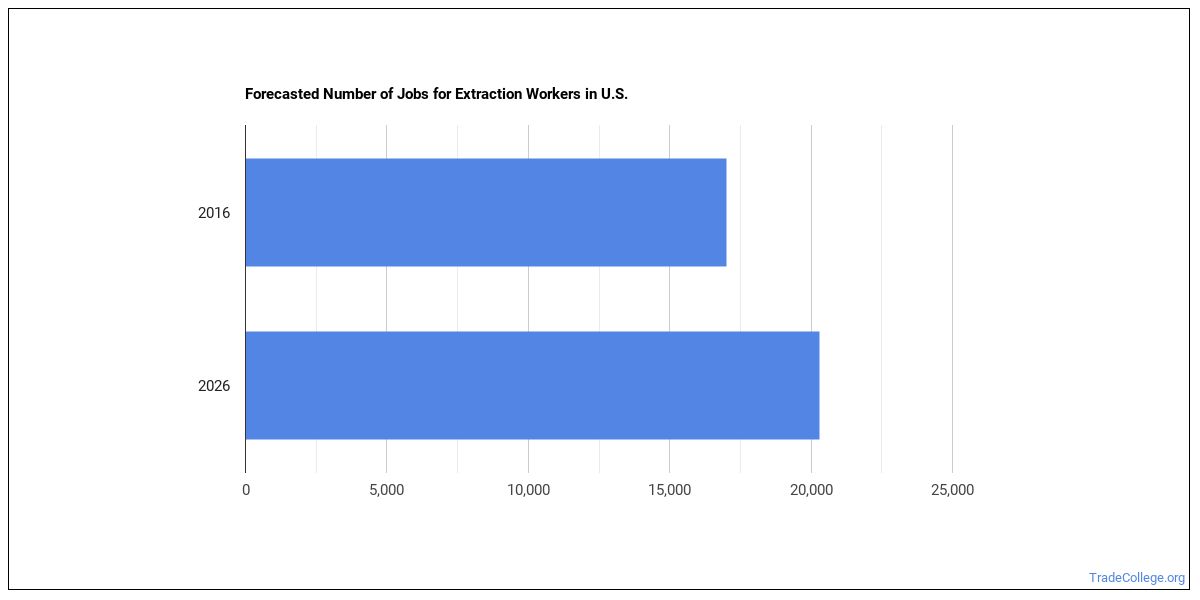
There are about 707,923 helpers–extraction workers working in the United States today. Demand is forecast to grow by +9.0% over the projection horizon.
How Much Do Helpers–Extraction Workers Make?
| Statistic | Value |
|---|---|
| Annual median | $58,903 |
| Hourly median | $28.32 |
| 10th percentile | $33,549 |
| 25th percentile | $46,226 |
| 75th percentile | $71,581 |
| 90th percentile | $84,258 |
Pay can vary substantially based on experience, location, and industry.

How Much Do Helpers–Extraction Workers Make in Different U.S. States?
| State | Annual median salary |
|---|---|
| West Virginia | $75,270 |
| Kentucky | $66,320 |
| Virginia | $65,250 |
| New Jersey | $60,020 |
| Indiana | $59,990 |
| Oklahoma | $57,560 |
| Wyoming | $55,970 |
| Utah | $54,100 |
| New York | $53,360 |
| New Hampshire | $52,990 |
| Arizona | $52,760 |
| Hawaii | $52,170 |
| Georgia | $51,810 |
| Maryland | $49,930 |
| Missouri | $49,230 |
| Alaska | $48,860 |
| Pennsylvania | $48,400 |
| South Dakota | $48,100 |
| Nevada | $47,250 |
| Montana | $46,030 |
| California | $46,010 |
| Oregon | $45,760 |
| Washington | $44,640 |
| New Mexico | $44,340 |
| Louisiana | $42,830 |
| Texas | $41,050 |
| North Carolina | $40,570 |
| Florida | $38,620 |
| Colorado | $36,550 |
Where Helpers–Extraction Workers Earn the Most
Pay for helpers–extraction workers vary by region. These regions lead on median pay:
| Region | Median annual wage | Share of U.S. jobs | Location quotient |
|---|---|---|---|
| Great Lakes | $59,990 | 2.1% | 0.91 |
| Southeast | $55,166 | 23.3% | 3.84 |
| New England | $52,990 | 0.8% | 1.77 |
| Middle Atlantic | $50,020 | 9.9% | 1.01 |
| Plains States | $48,432 | 2.8% | 4.49 |
| Far Western US | $46,975 | 17.1% | 4.21 |
| Southwest | $46,470 | 31.9% | 3.21 |
| Rocky Mountains | $46,038 | 12.2% | 4.55 |
Where the Jobs Cluster
| Metro area | State | Median annual wage | Employment |
|---|---|---|---|
| Phoenix-Mesa-Chandler, AZ | AZ | $66,130 | 300 |
| Bakersfield-Delano, CA | CA | $60,560 | 60 |
| Philadelphia-Camden-Wilmington, PA-NJ-DE-MD | PA | $52,000 | 60 |
| Billings, MT | MT | $50,740 | 40 |
| Midland, TX | TX | $46,130 | 230 |
| Charlotte-Concord-Gastonia, NC-SC | NC | $44,700 | 80 |
| Denver-Aurora-Centennial, CO | CO | $44,330 | 40 |
| Odessa, TX | TX | $41,250 | 110 |
Which Industries Hire Helpers–Extraction Workers
The largest employers of helpers–extraction workers work in these industries:
| Industry | Employment | Median annual wage |
|---|---|---|
| Mining, Quarrying, and Oil and Gas Extraction | 4,050 | $50,050 |
| Construction | 2,170 | $47,020 |
| Administrative and Support and Waste Management and Remediation Services | 120 | $42,870 |
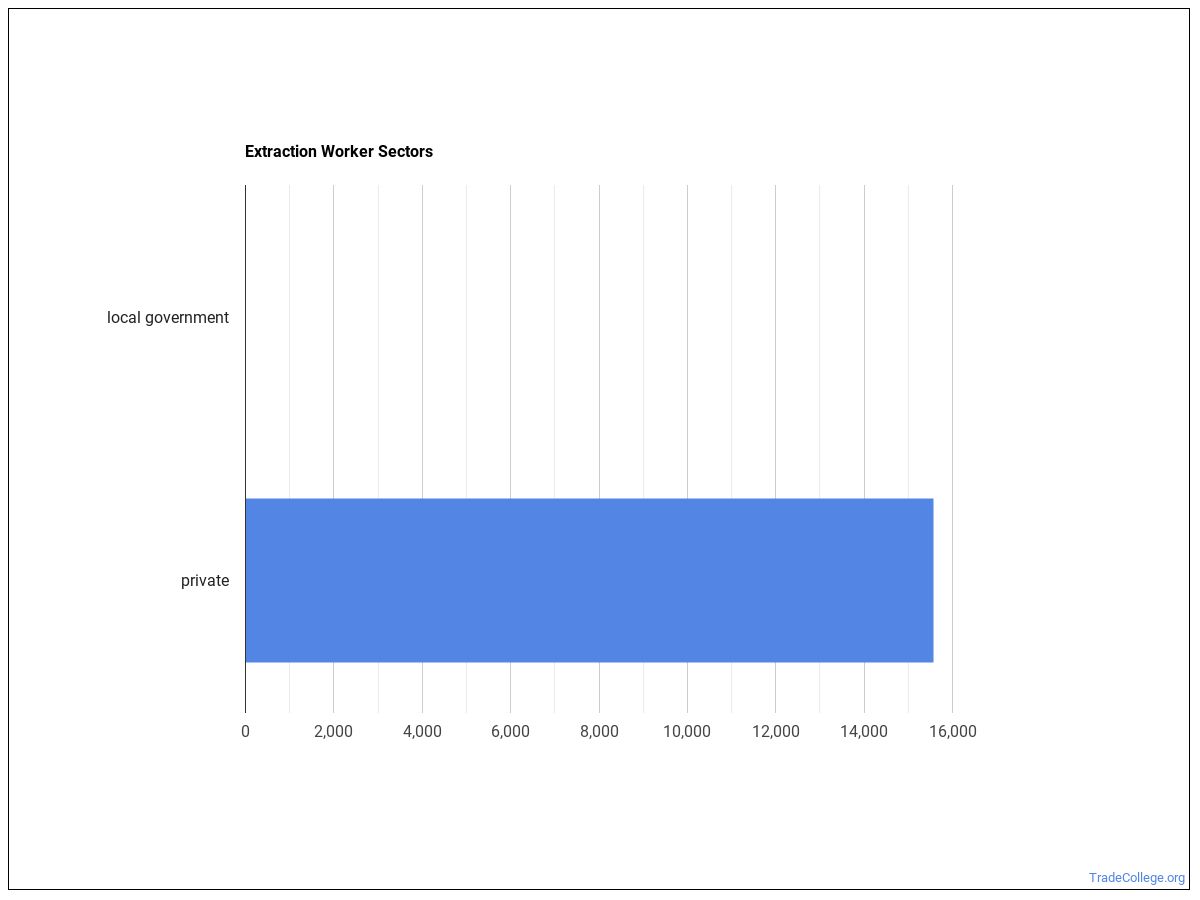
The table below shows some of the most common industries where those employed in this career field work.
Tech Stack
- Word processing software: Google Docs (hot technology)
- Spreadsheet software: Microsoft Excel (hot technology)
- Office suite software: Microsoft Office software (hot technology)
- Electronic mail software: Microsoft Outlook (hot technology)
- Word processing software: Microsoft Word (hot technology)
What the Workplace Is Like
The work environment for helpers–extraction workers tends to involve the following characteristics:
- Wear Common Protective or Safety Equipment such as Safety Shoes, Glasses, Gloves, Hearing Protection, Hard Hats, or Life Jackets
- Exposed to Hazardous Equipment
- Face-to-Face Discussions with Individuals and Within Teams
- Exposed to Sounds, Noise Levels that are Distracting or Uncomfortable
- Exposed to Contaminants
How to Become Helpers–Extraction Workers
Typical helpers–extraction workers positions require a high school diploma or equivalent as the typical entry-level education. This occupation sits in Some Preparation Needed (Job Zone 2), signaling the level of preparation typically expected.
Other Careers to Consider
Similar Occupations
- Construction Laborers (Supplemental)
- Operating Engineers and Other Construction Equipment Operators (Supplemental)
- Helpers–Brickmasons, Blockmasons, Stonemasons, and Tile and Marble Setters (Primary-Long)
- Helpers–Carpenters (Primary-Short)
- Helpers–Electricians (Supplemental)
- Helpers–Painters, Paperhangers, Plasterers, and Stucco Masons (Primary-Long)
- Helpers–Pipelayers, Plumbers, Pipefitters, and Steamfitters (Primary-Long)
- Rotary Drill Operators, Oil and Gas (Primary-Short)
References
Data on this page comes from the following authoritative sources:
- U.S. Bureau of Labor Statistics — Occupational Employment and Wage Statistics (OEWS) for employment and wage data by state and industry.
- BLS Employment Projections for total employment and growth forecasts.
- O*NET (Occupational Information Network) for skills, knowledge, tasks, work activities, work context, technology, and education-zone data.
SOC code: 47-5081.00 (Helpers–Extraction Workers).

TradeCollege.org provides higher-education, college and university, degree, program, career, salary, and other helpful information to students, faculty, institutions, and other internet audiences. Presented information and data are subject to change. Inclusion on this website does not imply or represent a direct relationship with the company, school, or brand. Information, though believed correct at time of publication, may not be correct, and no warranty is provided. Contact the schools to verify any information before relying on it. Financial aid may be available for those who qualify. TradeCollege.org is a for-profit site, and the displayed options may include sponsored or recommended results, not necessarily based on your preferences.
© TradeCollege.org – All Rights Reserved.