Find Trade Colleges
Farmworkers, Farm, Ranch, and Aquacultural Animals: Career Profile
Attend to live farm, ranch, open range or aquacultural animals that may include cattle, sheep, swine, goats, horses and other equines, poultry, rabbits, finfish, shellfish, and bees. Attend to animals produced for animal products, such as meat, fur, skins, feathers, eggs, milk, and honey. Duties may include feeding, watering, herding, grazing, milking, castrating, branding, de-beaking, weighing, catching, and loading animals. May maintain records on animals; examine animals to detect diseases and injuries; assist in birth deliveries; and administer medications, vaccinations, or insecticides as appropriate. May clean and maintain animal housing areas. Includes workers who shear wool from sheep and collect eggs in hatcheries.
The Daily Work of Farmworkers, Farm, Ranch, and Aquacultural Animals Perform?
The day-to-day responsibilities of farmworkers, farm, ranch, and aquacultural animals span:
- Feed and water livestock and monitor food and water supplies.
- Herd livestock to pastures for grazing or to scales, trucks, or other enclosures.
- Examine animals to detect illness, injury, or disease, and to check physical characteristics, such as rate of weight gain.
- Provide medical treatment, such as administering medications and vaccinations, or arrange for veterinarians to provide more extensive treatment.
- Mark livestock to identify ownership and grade, using brands, tags, paint, or tattoos.
- Drive trucks, tractors, and other equipment to distribute feed to animals.
- Segregate animals according to weight, age, color, and physical condition.
- Inspect, maintain, and repair equipment, machinery, buildings, pens, yards, and fences.
Skills and Knowledge
Top farmworkers, farm, ranch, and aquacultural animals draw on a mix of skills and domain knowledge.
Key Skills
The competencies most important for this role, rated on an importance scale of 0 to 5:
Top Knowledge Areas
Related Job Titles
People in this occupation may also be known by titles such as:
- Agricultural Worker
- Animal Care Taker
- Animal Feeder
- Animal Herder
- Animal Husbandry Worker
- Animal Keeper
- Aquaculture Worker
- Aquatic Laborer
Job Outlook
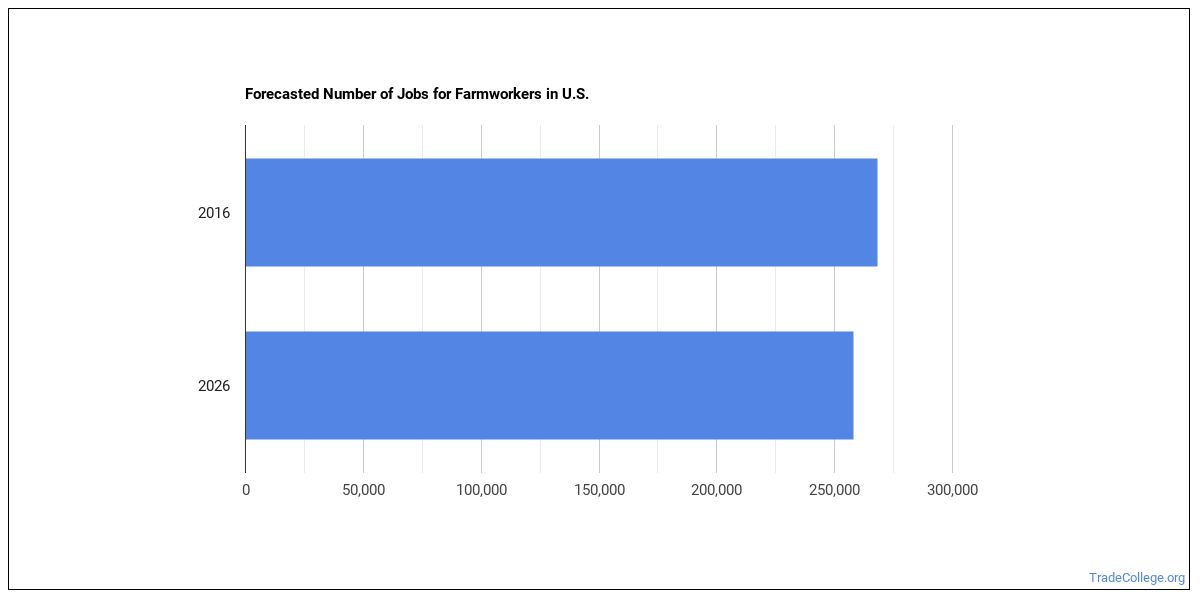
There are roughly 235,787 farmworkers, farm, ranch, and aquacultural animals working in the United States today. Employment is projected to decline by -1.5% over the projection horizon.
Farmworkers, Farm, Ranch, and Aquacultural Animals Pay
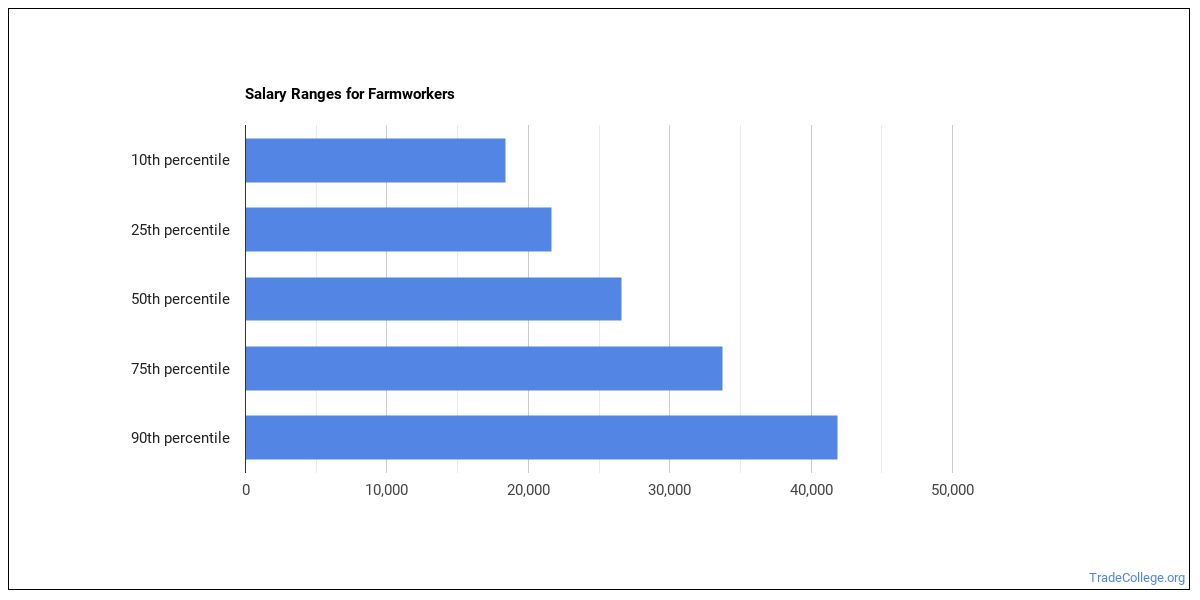
| Statistic | Value |
|---|---|
| Annual median | $35,854 |
| Hourly median | $17.24 |
| 10th percentile | $21,049 |
| 25th percentile | $28,452 |
| 75th percentile | $43,256 |
| 90th percentile | $50,658 |
Pay can vary substantially based on experience, location, and industry.
Pay by State
| State | Annual median salary |
|---|---|
| Hawaii | $48,990 |
| Alaska | $48,440 |
| Vermont | $47,230 |
| Washington | $43,540 |
| Minnesota | $42,650 |
| Utah | $42,120 |
| Louisiana | $41,720 |
| Idaho | $41,360 |
| Maine | $41,320 |
| Colorado | $41,230 |
| New York | $40,750 |
| North Dakota | $40,560 |
| New Jersey | $39,140 |
| Wyoming | $38,920 |
| South Dakota | $38,580 |
| Indiana | $38,120 |
| Massachusetts | $37,970 |
| Arizona | $37,470 |
| Mississippi | $37,440 |
| Nebraska | $37,440 |
| Virginia | $37,340 |
| Montana | $37,110 |
| Kansas | $36,940 |
| Delaware | $36,800 |
| Wisconsin | $36,100 |
| New Hampshire | $36,020 |
| Connecticut | $35,640 |
| Nevada | $35,480 |
| Maryland | $35,390 |
| Oregon | $35,360 |
| California | $35,310 |
| North Carolina | $35,230 |
| Alabama | $35,150 |
| Pennsylvania | $35,040 |
| Florida | $34,960 |
| Iowa | $34,740 |
| Illinois | $34,680 |
| Missouri | $34,400 |
| Tennessee | $34,350 |
| Kentucky | $33,850 |
| Texas | $33,050 |
| Michigan | $33,030 |
| South Carolina | $32,820 |
| Georgia | $32,810 |
| Oklahoma | $32,670 |
| New Mexico | $32,320 |
| West Virginia | $31,980 |
| Ohio | $30,890 |
| Arkansas | $28,410 |
Where Farmworkers, Farm, Ranch, and Aquacultural Animals Earn the Most
Earnings for farmworkers, farm, ranch, and aquacultural animals differ across the country. These regions lead on median pay:
| Region | Median annual wage | Share of U.S. jobs | Location quotient |
|---|---|---|---|
| Rocky Mountains | $40,161 | 9.0% | 3.42 |
| New England | $38,855 | 2.4% | 0.72 |
| Far Western US | $36,668 | 23.3% | 1.51 |
| Middle Atlantic | $36,434 | 7.1% | 0.73 |
| Plains States | $36,416 | 15.9% | 2.92 |
| Southeast | $34,756 | 17.6% | 1.21 |
| Great Lakes | $34,205 | 9.1% | 0.90 |
| Southwest | $33,375 | 15.5% | 1.28 |
Top Metro Areas
| Metro area | State | Median annual wage | Employment |
|---|---|---|---|
| Mount Vernon-Anacortes, WA | WA | $53,950 | 50 |
| Kahului-Wailuku, HI | HI | $53,190 | 40 |
| Waterloo-Cedar Falls, IA | IA | $51,840 | 40 |
| Portland-South Portland, ME | ME | $49,860 | 30 |
| Chattanooga, TN-GA | TN | $48,680 | 30 |
| Urban Honolulu, HI | HI | $47,850 | 80 |
| San Francisco-Oakland-Fremont, CA | CA | $47,440 | 320 |
| San Jose-Sunnyvale-Santa Clara, CA | CA | $46,990 |
Industry Breakdown
The bulk of farmworkers, farm, ranch, and aquacultural animals are found across these industries:
| Industry | Employment | Median annual wage |
|---|---|---|
| Agriculture, Forestry, Fishing and Hunting | 12,680 | $35,990 |
| Wholesale Trade | 6,910 | $34,610 |
| Health Care and Social Assistance | 2,910 | $34,130 |
| Arts, Entertainment, and Recreation | 2,240 | $36,640 |
| Manufacturing | 2,170 | $40,000 |
| Administrative and Support and Waste Management and Remediation Services | 1,360 | $37,340 |
| Accommodation and Food Services | 1,220 | $36,680 |
| Construction | 1,000 | $37,720 |

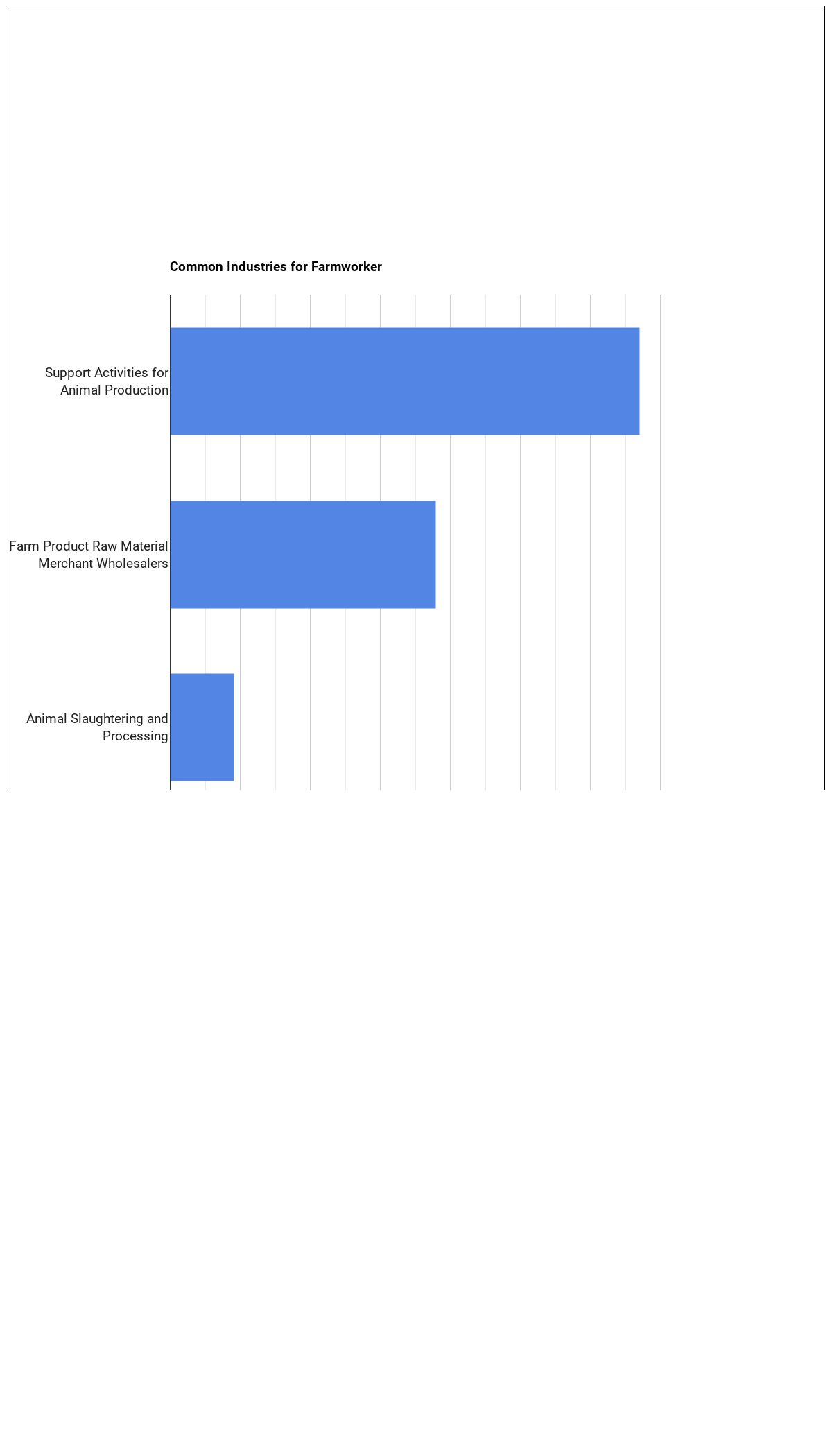
The table below shows some of the most common industries where those employed in this career field work.
Tools and Technology
- Spreadsheet software: Microsoft Excel (hot technology)
- Office suite software: Microsoft Office software (hot technology)
- Word processing software: Microsoft Word (hot technology)
The Day-to-Day Environment
Daily working conditions for farmworkers, farm, ranch, and aquacultural animals tends to involve the following characteristics:
- Exposed to Contaminants
- Face-to-Face Discussions with Individuals and Within Teams
- Spend Time Standing
- Outdoors, Exposed to All Weather Conditions
- Contact With Others
Getting Started in This Career
Typical farmworkers, farm, ranch, and aquacultural animals positions require a postsecondary nondegree award as the typical entry-level education. This career aligns with Some Preparation Needed (Job Zone 2), indicating the level of preparation typically expected.
Similar Occupations
Similar Occupations
- Farmers, Ranchers, and Other Agricultural Managers (Supplemental)
- Buyers and Purchasing Agents, Farm Products (Supplemental)
- Animal Scientists (Supplemental)
- Agricultural Technicians (Primary-Long)
- Pesticide Handlers, Sprayers, and Applicators, Vegetation (Supplemental)
- Animal Caretakers (Primary-Long)
- First-Line Supervisors of Farming, Fishing, and Forestry Workers (Primary-Long)
- Animal Breeders (Primary-Short)
About the Data
This profile draws on the following authoritative sources:
- U.S. Bureau of Labor Statistics — Occupational Employment and Wage Statistics (OEWS) for employment and wage data by state and industry.
- BLS Employment Projections for total employment and growth forecasts.
- O*NET (Occupational Information Network) for skills, knowledge, tasks, work activities, work context, technology, and education-zone data.
SOC code: 45-2093.00 (Farmworkers, Farm, Ranch, and Aquacultural Animals).

TradeCollege.org provides higher-education, college and university, degree, program, career, salary, and other helpful information to students, faculty, institutions, and other internet audiences. Presented information and data are subject to change. Inclusion on this website does not imply or represent a direct relationship with the company, school, or brand. Information, though believed correct at time of publication, may not be correct, and no warranty is provided. Contact the schools to verify any information before relying on it. Financial aid may be available for those who qualify. TradeCollege.org is a for-profit site, and the displayed options may include sponsored or recommended results, not necessarily based on your preferences.
© TradeCollege.org – All Rights Reserved.